
Centr Power & Power Pro Nutrition Handbook: Intermediate Centr Power & Power Pro Nutrition Handbook: Intermediate

Centr Team
11 Jul 2019

As an Intermediate lifter, stepping up your results requires fine-tuning your approach. In this handbook, we’ll give you tools to stay on top of your nutrition needs and take your muscle building to the next level with Centr Power or Power Pro.
There are 3 reasons nutrition is key to your muscle-building journey:
- You need adequate calories to give you the energy to train and support muscle building.
- You need adequate protein to maximize muscle protein synthesis – the process that drives muscle growth.
- Timing – It’s not just about what and how much you eat, but WHEN. This will help you perform at your best and fuel your growth and recovery.
Ensure that Gain Muscle is selected as your Goal in your Centr settings – this will lock in the Build Muscle meal plan as your base of nutrition. All main meals (including Vegan) on this plan contain adequate protein and are balanced for macros (protein/carbs/fats) and micronutrients.
Important: If you’re following all the suggestions in this handbook and not getting results, or you are concerned about any aspect of your nutrition, consult an accredited dietitian.
1. First rule: adapt to your needs
We provide the tools below to estimate your total calorie requirement, but please remember that no equation is perfect.
If you used the calculator below in completing Centr Power: Beginner, we recommend going through the process again before starting the Intermediate program, as your body and energy expenditure will have changed.
Every body is different and individual needs depend on a range of factors including genetics, body size, metabolism, weight, and training history.
As an intermediate lifter who has been strength training for some time, the changes you need to make may not be huge – so follow the principles as best you can, then monitor your progress and adapt as you progress.
2. How to estimate your calorie needs
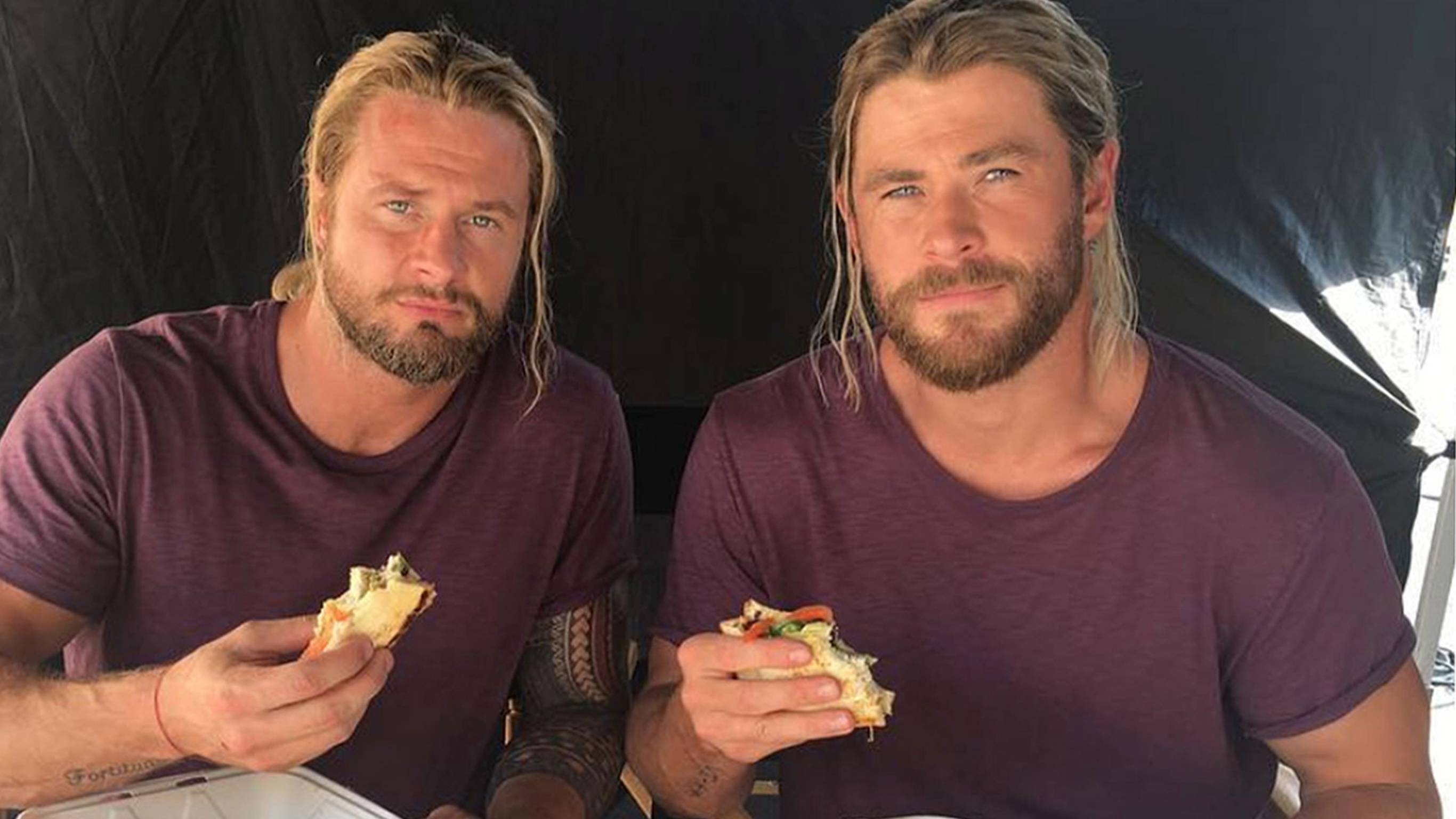
The method we give you here is the widely-used Harris-Benedict equation – Chris and Luke have consistently used this over the years as a starting point for their needs.
 1/4
1/4
Get the scoop on Chris's nutrition during his training for Thor: Love and Thunder.
The Harris-Benedict Equation is a scientific formula that measures your basal metabolic rate (BMR – how many calories your body burns to function) with your activity levels to determine your total daily energy expenditure (TDEE). You then need to factor in your body type (based on the somatotypes) and goals to estimate your additional calorie requirements to build muscle.
Once you complete the steps below, you will have an estimate of how many extra calories you will need to eat in addition to your Build Muscle meal plan.
STEP 1: Use the Harris-Benedict calculator below to begin calculating your TDEE.
START CALCULATING YOUR TDEE NOW.
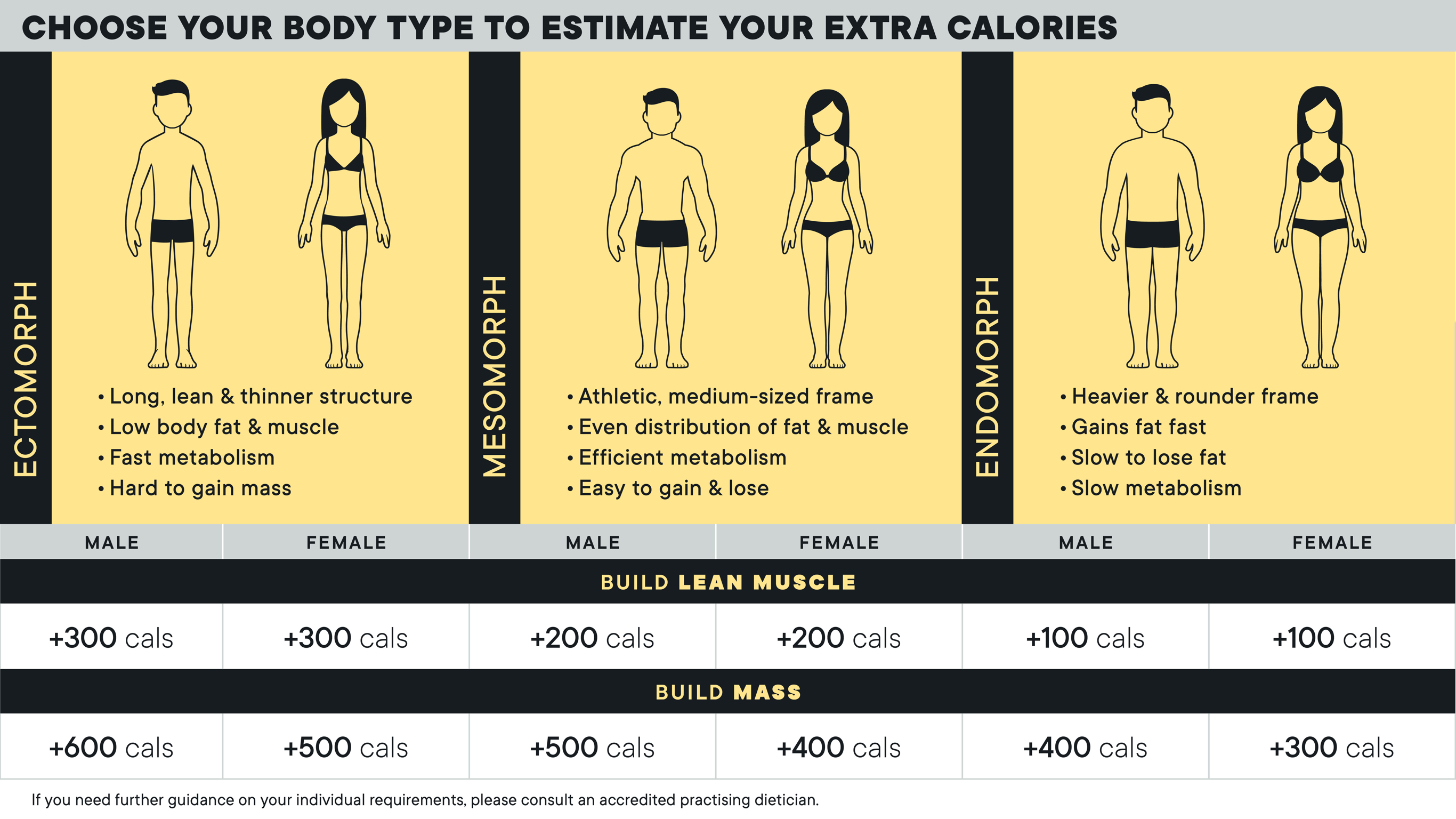
STEP 2: Select your body type based on the three somatotypes below, plus your muscle-building goal to arrive at your estimated extra calorie requirements. (Note that somatotypes are generalizations, but can be useful for this equation. For more information, read our article.)
What are the muscle-building goals?
- Build lean muscle: You want to build muscle and definition, without getting too bulky or adding body fat.
- Build mass: You want to add serious bulk, getting as big and strong as possible, so an increase in body fat doesn’t bother you.
 2/4
2/4
STEP 3. Add your TDEE to the suggested extra calories for your body type and goal to arrive at the total daily calories required for you to build muscle.
Example:
- Luke has a TDEE of 2800.
- He is a mesomorph who wants to build mass muscle, meaning his extra requirements are approx. 500 calories per day.
- His total daily target calories are 2800 + 500 = 3300 calories (approx.)
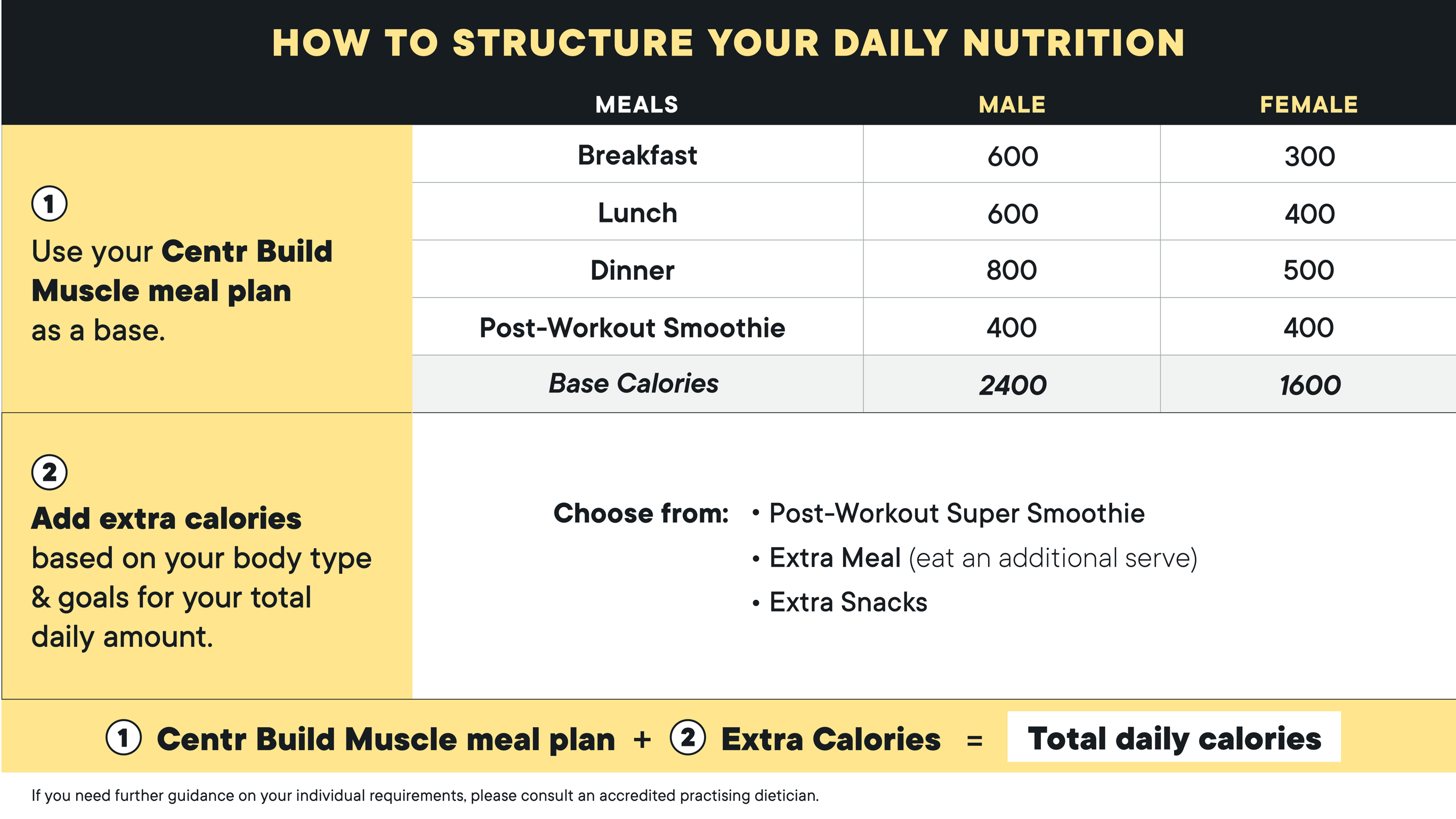
STEP 4. Your base Build Muscle meal plan delivers a minimum of 2400 calories per day for men and 1600 per day for women.
This is made up of your 3 main meals and a post-workout Super Smoothie.
To achieve your daily target, you can then add calories in a number of different ways, depending on your preference. Choose from:
- an extra Super Smoothie
- an extra meal (double portion or a separate meal)
- extra snacks (see the Power Snacking Guidelines for more information)
As a guide, macronutrients for main meals on the Build Muscle meal plan follow a balance of:
Regular & Pescatarian – 30% protein, 30% fat, 40% carbohydrates
Vegetarian – 15-30% protein, 30-35% fat, 40-50% carbohydrates
Vegan – 15-20% protein, 35% fat, 40% carbohydrates.
Reminder: Individual requirements always vary. If you are unsure the estimate is right for you, or you need help adjusting and monitoring your progress, please consult an accredited dietitian.
 3/4
3/4
Example
- Luke’s total calorie target is 3300 calories.
- In addition to his Centr Build Muscle meal plan at 2400, he needs to make up an extra 900 calories.
He decides to add:
- A second Super Smoothie at 400 calories
- 2 x Choc Protein Mug Cakes at 250 calories each
3. Timing your nutrition to max your results
Pre-workout: If you’re working out first thing in the morning, have a snack or a light breakfast (e.g. a smoothie) an hour before you start.
If you train late afternoon or after work, aim to have lunch 3-4 hours prior, then a top-up snack with protein and carbs an hour before.
It’s okay to go through a bit of trial and error to find what fuels you best, and when you do your best work. For example, Luke will often have a coffee before his morning workout, while Chris will have a morning smoothie, then breakfast, before doing his workout at midday.
Post-workout: Ideally, you will have a post-workout snack or meal (containing at least 20g of protein) within 1-2 hours of your workout. Your recovery nutrition is critical to trigger the process of muscle protein synthesis. But it’s not just that initial window where it’s important – your intake of protein over the following 24-72 hours and your TOTAL calorie intake is key when it comes to getting results.
Remember, you can be hitting your protein goals, but if your calorie intake is less than your body needs, you’re likely to LOSE muscle. So learn how to perfectly time your snacks and eat up!
4. What about non-lifting days?
According to your Centr nutrition expert Angie Asche, you should keep your calories up even on the days you’re not training.
“Your deload week is a good opportunity to repair and rebuild, which requires consuming adequate energy. Continuing to eat in a surplus will help promote consistent muscle gain.”
5. What gains can you expect?
You’re nailing your training with good form and following the meal plan. Excellent! As an intermediate lifter, the size and speed of your gains will depend on the levels of muscle mass you’re starting with.
Refining your nutritional intake can also have a big impact on your progress. Research indicates a target weight gain of around 0.25–0.5% of your total bodyweight per week. However, your results can be influenced by a range of factors, so try not to get too focused on the scales.
If you’re gaining weight but feel like some of it is fat rather than muscle, don’t give up. The good news is: muscle burns fat, so the more muscle you gain as you go on, the more fat you will burn longer term. If you seem to be gaining fat quickly, bump down the calories a little and monitor how you go.
 4/4
4/4
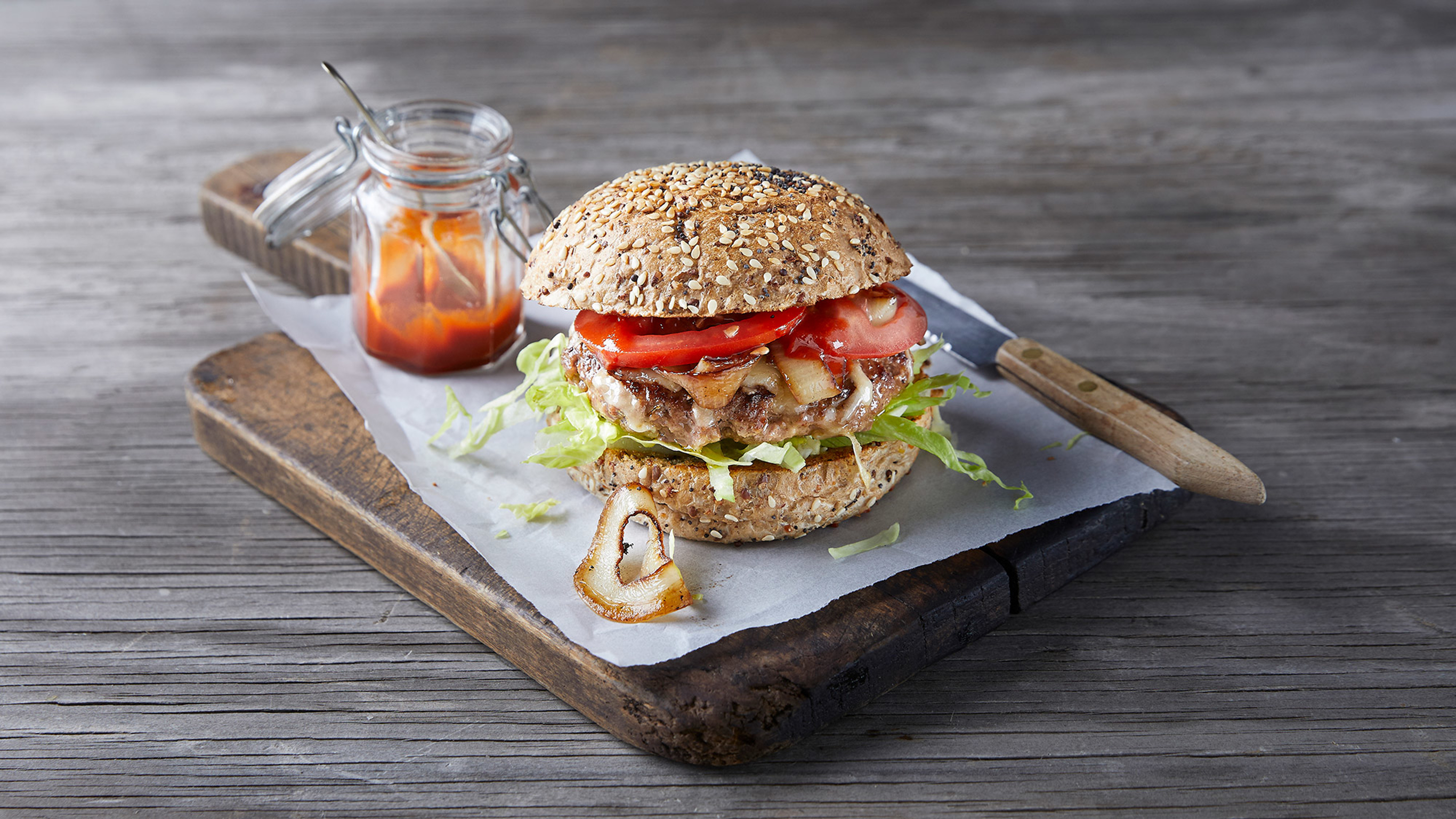
Nutritional information is outlined on every Centr recipe (including this Beef Burger with Salad), so it's easy to keep track when you’re adding calories.
6. What to do if you're not seeing gains
If you’re smashing your workouts, the most likely reason is that you aren’t eating enough. Make sure you’re meeting your calorie needs (as calculated above) and if you’re not getting results, bump up your intake by:
- Adding an extra meal per day – try doubling the serving size of one of your main meals and keeping half for later.
- Adding extra carbohydrates to your existing meals – e.g. rice, sweet potato, pasta, or quinoa.
Another issue could be your protein spacing:
- Aim to eat good quality protein every 3 hours or so throughout the day for optimal muscle protein synthesis – 0.88-1.41oz/25-40g post-workout, then at least 0.7-0.88oz/20-25g throughout the day.
If you hit a plateau: As you gain muscle, your resting metabolism will increase so you may need to eat more to continue to gain muscle. It may only require a subtle change in intake – so add an extra snack or meal and see how your body responds.
If you have a high metabolism: If you find it difficult to gain muscle, you may need to add an extra meal or snacks to your daily intake.
7. Supplements: yes or no?
You’ve probably heard people talking about the supplements they’re taking to rev up their gains. At Centr, we take a “real food” first approach, including plenty of protein in your meal plan.
Protein supplements: Getting enough protein can make it feel like you are constantly eating, which makes protein powder a convenient option. You’ll already find it as an ingredient in your Centr smoothies and snacks.
Once you are in the swing of your routine, there are a handful of other supplements that may help – but they are by no means essential. Our Supplements Guide will help you make an informed decision.
Building muscle basically comes down to three things – being in a calorie surplus with good food, backed up by weight training, and consistency. Focus on getting this locked down before you go out and spend all your money on supplements.
Luke Zocchi
8. Building muscle when vegetarian or vegan
The ratio of protein in the Build Muscle meal plan for vegans of 15-20% may seem low, but with protein in your three main meals (ranging from 25-50g each), and a Super Smoothie containing adequate leucine (an essential amino acid) in the immediate post-workout recovery period, you will have a good spread of protein throughout the day.
When making up your extra calories, prioritize Super Smoothies as this is an easy way to boost your daily protein and incorporate additional calorie requirements in one hit. See the Supplements Guide for advice on smoothies and protein powders.
If you need inspiration, Centr’s resident bodybuilding champ Torre Washington has achieved his physique on a 100% vegan diet.
9. Women who lift
In general, the same muscle-building nutrition strategies apply to men and women. However, genetics make it more challenging for some women to gain significant muscle mass and women can naturally be more prone to gaining body fat. So be conservative when increasing calories and focus on getting the best possible results for you.
Planning your nutrition and training around your menstrual cycle or hormonal stage can help to optimize your outcomes.
10. Recipes that make muscles happen
Now you’re getting your head around the nutrition you need to maximize your results, you just need quick and easy recipes to do it. Here are some of our favorite muscle-building morsels:
5 power bars to boost your workout
10 high-protein snacks to eat after your workout
7 post-gym tray bakes you can just throw in the oven
6 of Sergio's best post-workout protein dinners


