

Calories: you may have squinted at them on food labels and studied them on an increasing number of restaurant menus, and you probably know that managing them is a crucial part of either losing body fat, getting fit or gaining muscle.
But do they impact your fitness goals, and how do they factor into your Centr meal plan? Buckle up, Legends, we’re diving deep into the science behind calories with Advanced Sports Dietitian Lisa Middleton.
Understanding the calorie equation
The calories in vs calories out formula (often abbreviated as CICO or called calories burned vs calories consumed) is the name given to one of the most widely accepted theories of weight management.CICO is based on the idea that losing, maintaining, or gaining weight is all about the relationship between two numbers: the calories you consume in the form of food and drink, and the calories you burn through exercise, regular movement, and simply existing.
Fun fact: The stuff happening inside your body when you’re not actively moving is responsible for 60–70 percent of the calories you burn every day. This is known as your basal metabolic rate (BMR), and it varies depending on factors like your age, weight, sex and body fat percentage, to name just a few.
According to the CICO formula, you need to burn off more calories than you consume to lose weight – this is called being in a calorie deficit. If you want to maintain weight, you need to take in a similar number of calories to the amount you burn. And if you want to gain weight you’ll need to eat more than you burn.
Are all calories created equal?
The basic science of CICO – that you need to maintain an energy deficit to lose weight – is not in question. But there are a number of other factors that shape the success of using this formula alone for weight management.
Firstly, the quality of your calories matters.
“It’s true that how much we eat is more important than what we eat when it comes to weight management,” Lisa says. “But 1500 calories worth of chocolate per day is not going to be sustaining or nutritious."
“It’s important that if you’re in a calorie deficit, you're not missing out on the vital nutrients that keep your body fueled and firing on all cylinders."
You’ll remember earlier when we mentioned BMR – that’s the calories you burn at rest – well, it’s as individual as you are. No two BMRs are the same! So even if you and your training partner are diet-and-workout twins, you’re not going to lose or gain weight at the same speed.
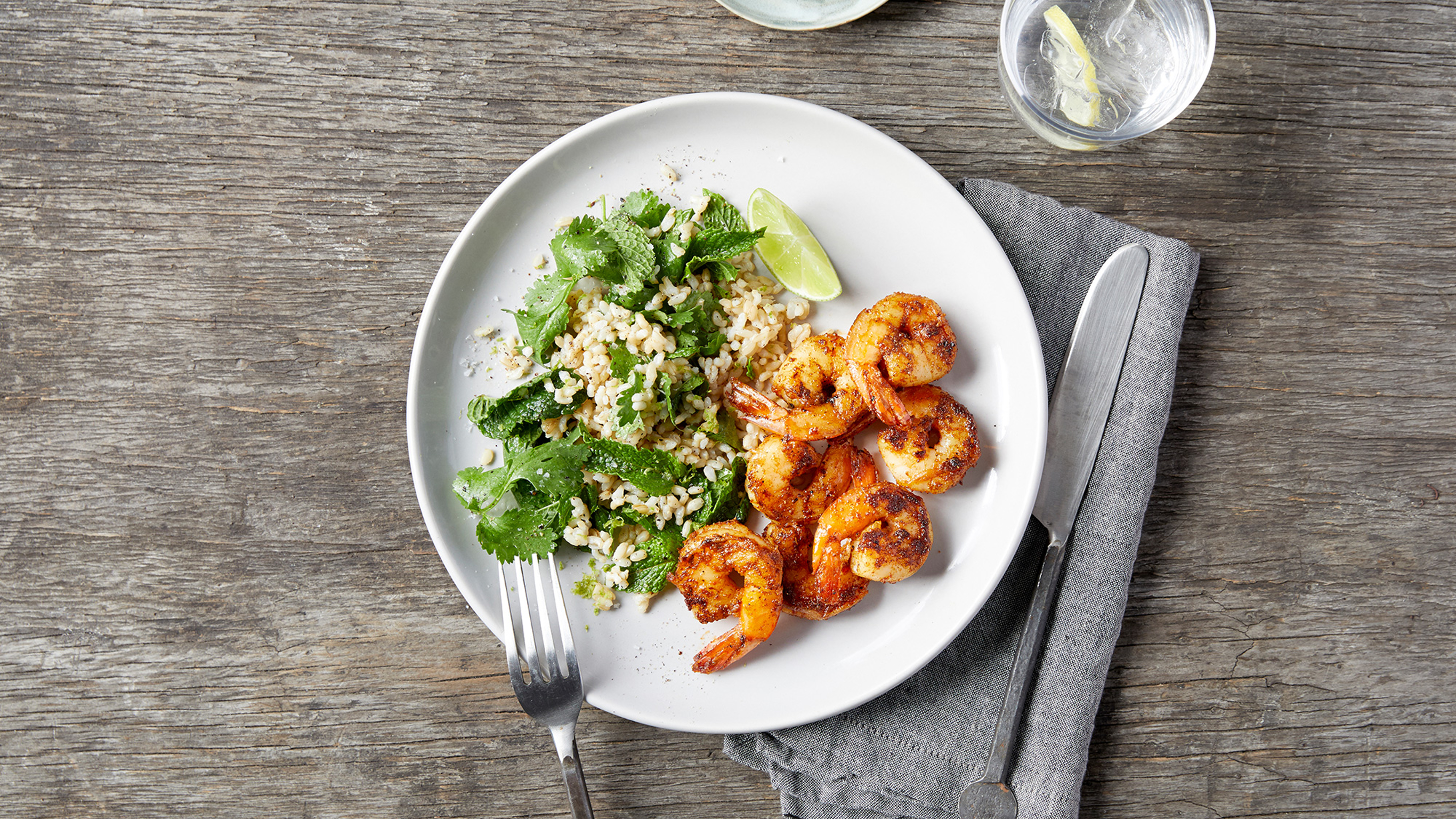
Get high-quality calories from nutritious meals like Dan’s BBQ Prawns with Herb Rice Salad.
There are a number of online calculators, gadgets, and apps that can help you to determine your BMR, but you should keep in mind that even these do not offer an entirely accurate picture.
“It is really important to monitor your own hunger levels, energy levels, and physical progress to determine if you need to adjust the number of calories you’re taking in,” Lisa says.
If you want to Lose Fat
If your aim is weight loss, the goal is to eat at a calorie deficit of 200–500 calories per day.
“If you try to increase your deficit by a lot more it can lead to loss of muscle, which is not what you want if you are trying to build fitness and achieve a lower body fat percentage in the long term,” Lisa says.
Make sure to read the Lose Fat nutrition guide, and remember that depending on your size, age, metabolism and activity level, you may need to eat slightly more or less than the base meal plan to get results.
If you want to Build Strength or Gain Muscle
You need adequate calories to promote muscle growth. The Build Muscle meal plan (including snacks) that covers these two goals provides women with up to 2200 calories per day and men with up to 3200 calories per day.
“Those with a fast metabolism or who are new to training may require more calories than those who have been training for years,” Lisa says. “Start with the base plan and then monitor and adjust to your individual needs.”
Your Build Muscle nutrition guide has everything you need to know to fuel correctly.
If you want to Get Toned or Stay Healthy & Fit
These goals are all about improving your muscle mass to body fat ratio, so your meal plan is based around average maintenance calories – giving you enough energy to power through your workouts, but not enough to gain significant weight.
If you don’t have the energy to train hard, you may need to lift your calorie intake. Start with an extra snack or larger meal portion and monitor your progress. Read the Healthy, Fit & Toned nutrition guide for more guidance.
Remember, if you have specific individualized nutrition requirements and body goals, it’s best to consult with an accredited sports dietitian.



Leave a comment
This site is protected by hCaptcha and the hCaptcha Privacy Policy and Terms of Service apply.