
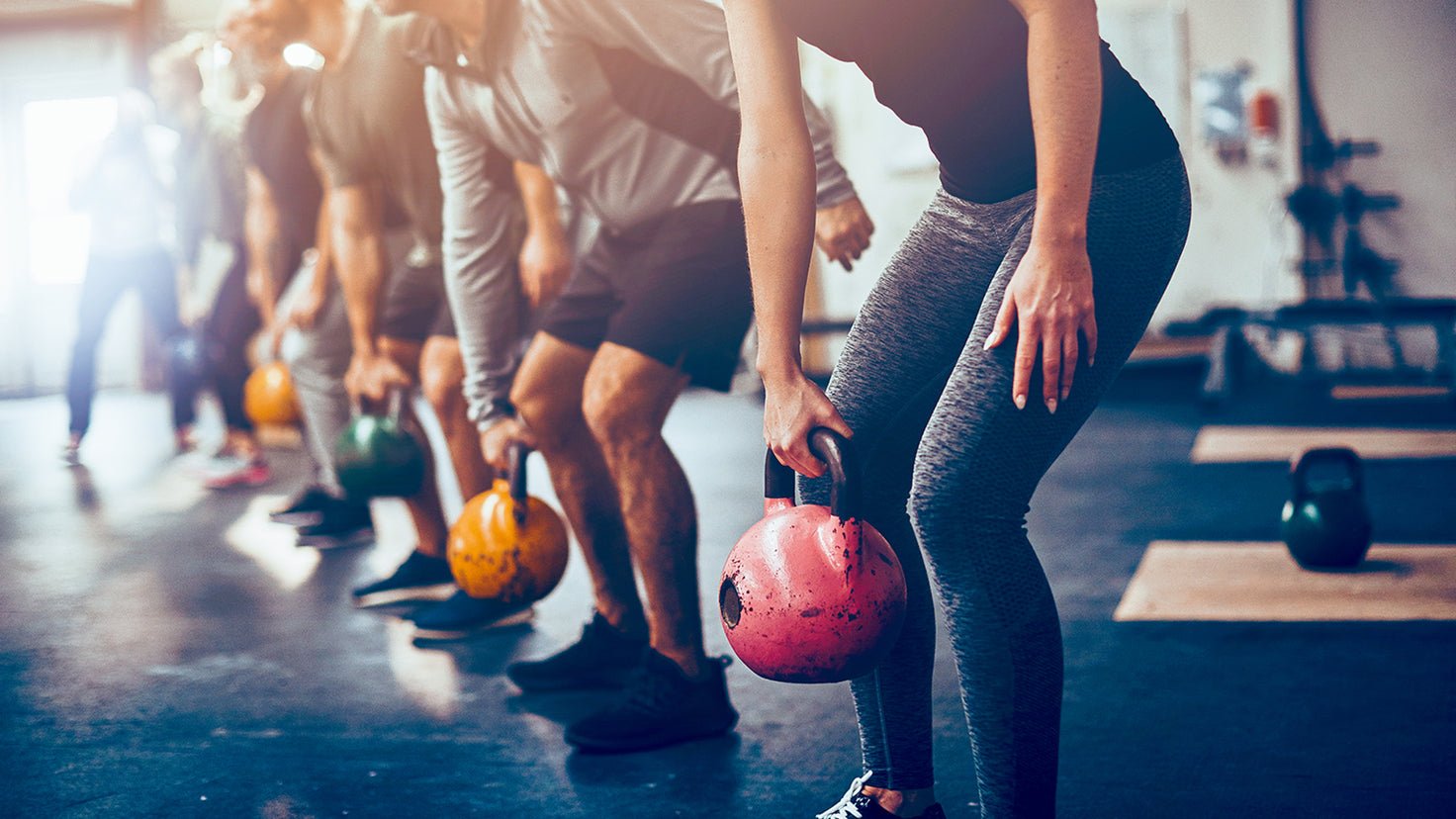
There was a time not so long ago when strength training – especially the kind done with dumbbells, bars and machines – was seen as the exclusive domain of people trying to add serious mass.
Thankfully, those days are gone. Decades of research has shown that the benefits of strength training extend far beyond building muscle. Working with weights will assist bone density, can decrease the risk of diabetes and cardiovascular diseases, and even improve the body’s ability to clear sugar and fat from the bloodstream.
No matter what your goal is or how much you’re lifting, strength training is an essential part of your weekly routine. But working with weight (even if it’s just your body weight) requires attention to detail if you want to reap the full benefits.
We’ve rounded up some of the most common mistakes that make good strength exercises go bad.
1. Push-up variations
The mistake: You haven’t nailed the basics
The push-up is an essential bodyweight move, and you’ll find plenty of variations on this upper-body classic in your Centr workouts. It’s also an exercise that a lot of people get wrong, so it’s worth evaluating your form before you try to smash out dozens of reps or tackle the progressions.
To begin, get into a high plank position with your wrists placed under your shoulders, your pelvis tilted under, your glutes squeezed, and your core engaged.
When you drop down towards the floor, you want to keep your elbows pointing towards your feet, not ‘flaring’ out to the side. If you looked at your body from above, you’d want your form to look like the shape of an arrow, not the letter ‘T’. This form applies whether you’re doing a push-up from your knees or your feet.
Once you’re confident that your fundamental form is good, check out Luke’s tutorial on push-up variations. Struggling with push-ups? Ashley has a strength workout to get you there!
2. Side plank
The mistake: Not engaging your hips
As a wise woman once said: hips don't lie. Failing to adequately engage the hips will make your side plank soft, and soft is the opposite of what you want during a plank of any kind.
When you’re in your side plank position, make sure you are tucking your tailbone under (not pushing your butt out) and squeezing your glutes together to give you stability. Once you are stable, you can focus on lengthening through the hips, an area that is tight and short for many of us due to prolonged sitting. Done correctly, the wide plank is a great exercise for stretching and strengthening weak hips.
3. Arnold press
The mistake: Not protecting your shoulders
Performing an Arnold press correctly and without injury requires a decent level of mobility in your shoulders and thoracic spine (the part of your spine that runs through your abdomen and upper back). It’s important that you adequately warm this area up – particularly if you have poor posture or experience rotator cuff stiffness – before you smash your Arnold presses.
If you have poor posture or a tight upper back, try adding some yoga cobras and supermans to your warm-up session. Make sure your warm-up also includes exercises that target shoulder mobility like resistance band pull-aparts, resistance band archer rows, arm circles, and chest openers to get those shoulders limber.
When performing the lift, pay attention to your shoulders. They should come together at the back as you rotate the dumbbells outward, upwardly rotate as you lift the dumbbells up, and depress down away from your press as you bring the dumbbells down.
4. Dumbbell overhead press
The mistake: Arching your lower back
You need to engage your whole body during an overhead press, not just your arms and shoulders. If you let your lower body take a break during this exercise, you are setting yourself up for injury.
Protect your lower back during your press by engaging your core (always!) and keeping a very slight posterior pelvic tilt. That means tucking your tailbone under and squeezing your glutes together to ensure your trunk is working as a solid base.
5. Kettlebell swings
The mistake: Not using your glutes
Who doesn’t love a kettlebell swing? Done correctly, this exercise is a full-body burner that’s fun to perform. But as it involves both explosive movement and heavy weight, you want to make sure you’re performing it with care. You should be able to feel a kettlebell swing in your glutes. If you can’t, you may be ‘squatting’ into your swing instead of hinging at the hips.
To begin, aim to keep your knees ‘soft’ but in a fixed position, and let your hips hinge while keeping your back flat. To swing the kettlebell up, fire your glutes and push your hips forward, squeezing your glutes together at the top of the movement. When the kettlebell begins to swing back towards the floor (gravity takes care of this part) hinge your hips again and push your glutes back. If you’re doing it correctly, you’ll feel the burn in your behind.
6. Dumbbell renegade rows
The mistake: Moving your whole body
When it comes to renegade rows, keeping it tight is doing it right.
To ensure you get the most out of this move, tuck your tailbone under, squeeze your glutes, brace your core and draw your belly button in. You want to get your body as rigid as possible, and stay that way with every single rep.
7. Conventional deadlift
The mistake: Letting your back get slack
Ah, the not-so-humble deadlift. Perform it correctly and it works the whole posterior chain – your glutes, hamstrings, calves, and spinal erector muscles (the muscles that support your spine). Perform it incorrectly and you’ll likely feel the wrong kind of sore in your lower back for days to come.
You probably know that keeping your core tight and glutes ‘on’ is essential while performing a deadlift. Where many people go wrong is in neglecting their upper back muscles, leading to a rounded upper back during the movement.
During your set up, grip the bar as hard as you can and push your shoulders down towards your hips (it can help to think about ‘hiding’ your armpits). This will help you keep your upper back firing so your lower back doesn’t overcompensate.
8. Dumbbell snatch
The mistake: Not snatching vertically
With this move, you need to snatch the dumbbell straight up towards the sky and avoid moving it forward.
Pushing or swinging the dumbbell forward and then up will suck the explosive force out of the move and can lead to injury.
The next time you attempt a dumbbell snatch, think “Like a rocket launch, not a plane taking off” and keep the move vertical.
9. Dumbbell front squat
The mistake: Not warming up your ankles
Weighted squats are a great way to hit multiple muscle groups at once, including (but not limited to) your quads, hamstrings, and glutes. But in order to feel the total benefits of a squat, you need to perform the exercise with a full range of motion, which is tricky if you have poor ankle mobility.
In order for your knees to come forward and your hips to sink back, your toes need to be able to move towards your shins. The technical name for this movement is dorsiflexion.
Improving ankle dorsiflexion during your squats can be as easy as dedicating part of your warm-up to the area. Performing a few sets of full-range calf raises, using a foam roller on your ankles and calves, or holding a front lunge position while focusing on stretching your ankle are all options.
Don’t forget, whether you’re using weights or not, a squat is only worthwhile if you’re performing it with your feet planted to the ground, heels dug in and your knees tracking straight over your feet (not caving inward).


Leave a comment
This site is protected by hCaptcha and the hCaptcha Privacy Policy and Terms of Service apply.