

From boxing to HIIT and plyometric blasts, our team of trainers know what it takes to get you burning fat and losing weight.
But the food you eat is the other key to your weight loss journey, so you’ll need to back up that training expertise by getting serious about nutrition.
When you set your goal to Lose Fat on Centr, your dietitian-approved meal plan is immediately customized. Our nutrition estimates are based on what is needed by the average active man or woman who is trying to lose excess body fat. While this provides a structure and strong base for achieving your goals, you may need to adjust intake to suit your needs.
So why is nutrition key to losing body fat?
- If you want to lose weight, you need to consume fewer calories than you expend.
- You need adequate protein to minimize muscle loss.
- It’s not just about what and how much you eat, but when you eat – to help you perform at your best and to fuel your recovery.
Read on to get your nutrition on track, and set your fat loss journey up for success.
Important: If you’re following all the advice in this guide and still not seeing results, or you are concerned about any other aspect of your nutrition, consult an accredited dietitian.
The Lose Fat meal plan
The Lose Fat meal plan is designed to deliver lower calories to create a calorie deficit that will promote body-fat loss – but it’s not so low that you are constantly tired and lacking energy. You still need to be able to feel good and train at your best!
And it’s definitely not about depriving yourself. You can choose up to 2 snacks per day to enjoy between meals – be sure to check your Lose Fat snacking guidelines to stay on track.
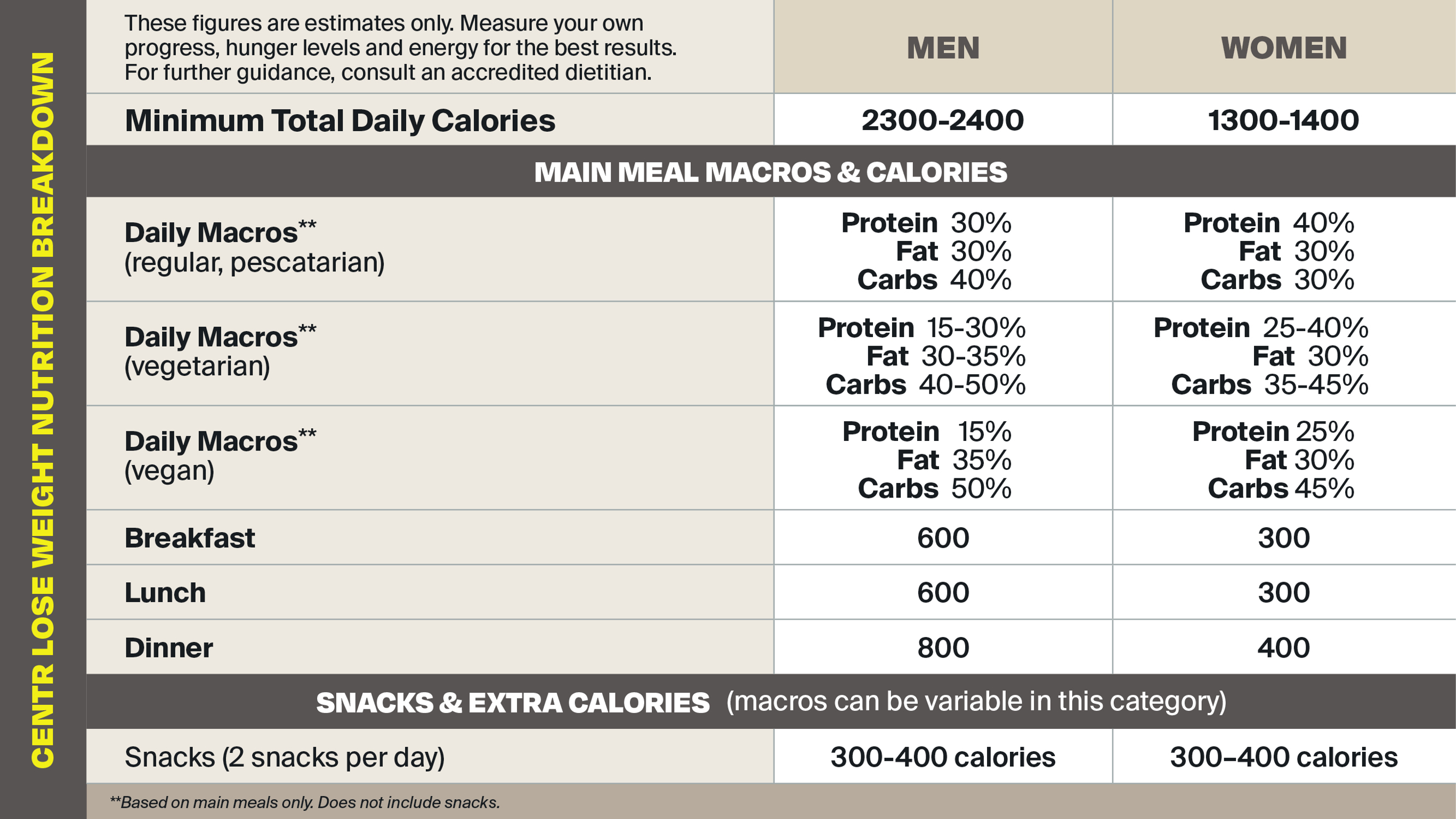
You don't need to count calories – we've done all that for you – but the daily calorie range for this goal (including snacks) is:
Women: approximately 1300–1400
Men: approximately 2300–2400
 1/2
1/2
Remember, everybody’s nutrition needs are different. Your requirements will vary according to a range of factors including how hard and often you’re training, body composition and muscle mass, your age, size, metabolism, genetics, as well as your specific goals. It’s important that you monitor your progress – as well as your hunger and energy levels – to ensure your nutrition needs are being met.
Mixing up your meal plan
If you’re swapping meals, be sure to read the ultimate guide to Centr meal swapping and brush up on your easy vegetable swaps.
If you’re concerned about the cost of the meal plan, we recommend learning how to make the most of your leftovers, saving our ultimate recipe guide to your favorites, and reading our guide to budget-friendly grocery shopping.
What about protein?
Protein isn’t just a priority for people who want to build serious muscle, says Centr nutrition expert Angie Asche.
“I recommend a high-protein diet for anyone trying to decrease body fat while preventing the loss of lean muscle. Aim to include a high-quality protein source with each meal.”
Got more protein questions? We’ve got the answers. If you want help choosing a protein powder, we’ve got you covered there too.
What if you’re vegetarian or vegan?
You can lose fat and maintain muscle on a plant-based diet, but it does require a little extra care and attention.
We take a real food first approach at Centr, so our dietitian-approved meal plans will meet most of your nutritional needs – including protein – using natural whole foods. However, high-quality vegan protein powder can be useful for ensuring you’re getting the right mix of amino acids at the right time, so you’ll often see this as an ingredient in smoothies and snacks.
Check out our essential tips for vegetarians and vegans for more information on protein powder, supplements, soy and more.
 2/2
2/2
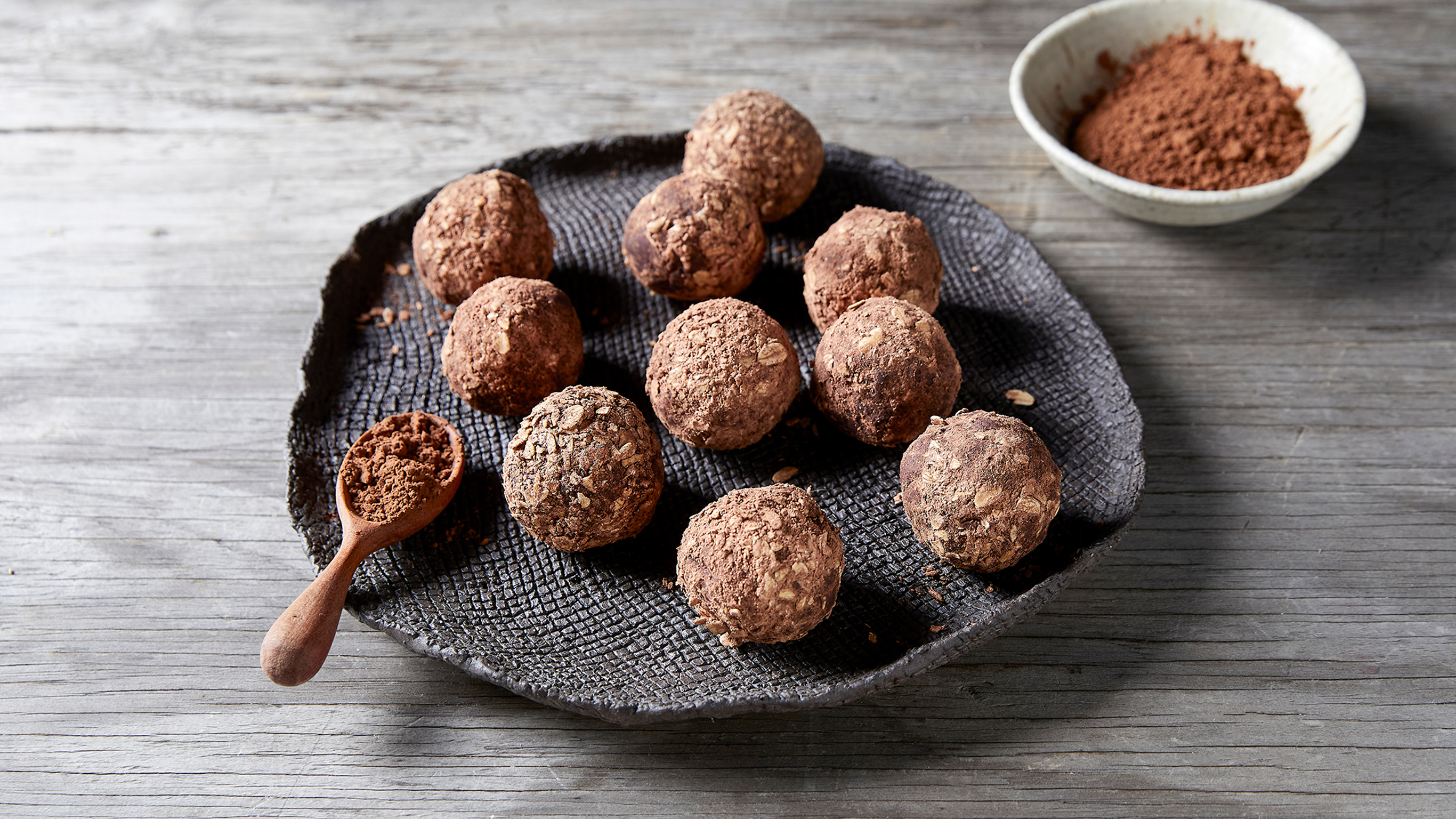
Dan’s Choc-Mint Energy Bites make the perfect post-workout snack for vegans and omnivores alike.
How to keep your fat loss on track
How quickly can you expect to lose body fat? About 1-2lbs (0.5-1 kg) of fat loss per week is a healthy goal for most people – trying to drop weight faster than this is often not sustainable and could leave you fatigued.
Remember, the scales are only one way to track your progress, and often don’t tell the full story.
Take pictures before starting, and as your journey progresses. Use a tape measure and keep an eye on how your clothes are fitting. (You may notice you need to tighten your belt before you see a big change on the scales.)
Having some goals not related to fat loss – like making it through workouts with fewer breaks or nailing a tricky exercise – will also help you to maintain a healthy attitude during your health and fitness journey.
Help, I’m not losing body fat!
If you’re smashing workouts with your Centr trainers consistently and following your meal plan, but still not dropping body fat, there could be a number of factors at play.
- Remember, weight loss isn’t a straight line - no matter how tuned-in you are to nutrition. Your body weight can fluctuate day-to-day depending on a variety of factors like your hormones, how hydrated you are and your digestion. Try setting yourself a goal to only weigh yourself once a week, or once a month, and be patient.
- Track your food intake for a week. Mindless snacking adds up, and we don’t always remember doing it. It could be that finishing off your kid’s sandwich or that ‘occasional’ handful of chips is happening more frequently than you think. In addition to recording what you eat, keeping track of when and why you are eating can be a helpful way to determine your triggers. For example, you might find yourself turning to the fridge more often when you’re stressed.
- If you’re already at a healthy weight for your height, it may be time to reconsider your goal. Sometimes people think they want to lose body fat when what they really want is to ‘tone up’ – i.e. grow lean muscle and change their body composition. You could consider switching your goal to Get Toned, which will provide you with more calories to add definition.
Adapt for success
Your structured Centr meal plan sure does make life easy, but stay dialed into your progress, your hunger and how you’re feeling so you can adjust your food intake accordingly. Listening to your body is the most important part of any health and fitness journey, no matter your goal.
If you have specific, individualized nutrition requirements or body composition goals, it’s best to consult with an accredited sports dietitian.


Leave a comment
This site is protected by hCaptcha and the hCaptcha Privacy Policy and Terms of Service apply.