
What really happens when you eat after dark? What really happens when you eat after dark?

Centr Team
17 Mar 2021

Thinking about trying intermittent fasting? Too late. The trends have moved on and now everybody’s into circadian rhythm fasting.
Circadian rhythms – “that’s our internal 24-hour clock, isn’t it?” Why yes it is. So what does that have to do with food or dieting? Let’s find out!
What are circadian rhythms?
As you so cleverly clocked, circadian rhythms are the internal 24-hour cycles – evolved to be (roughly) in sync with daylight and night – that keep your body and mind running as smoothly as possible.
The most well-known of these rhythms is the sleep-wake cycle. As your eyes sense the light coming in through your bedroom window, the ‘master clock’ in your brain sends hormones like cortisol rushing through your body to wake you up. At the other end of the day when it gets dark, your brain orders melatonin (among other things) out into your body to help you sleep.
If your sleep is irregular, this messes with your circadian rhythms, and confuses your body. This can have a big impact on your eating, as Advanced Sports Dietitian Lisa Middleton explains.
“Being underslept has a negative impact on the hormones that contribute to hunger and fullness, and can increase your preference for foods that are high in sugar, salt, and fat,” she says. “On top of that, being low energy can have an indirect impact on your food choices.”
If you find yourself madly hunting for sweet treats to get through the afternoon, you understand.
But what do circadian rhythms have to do with fasting?
Unlike intermittent fasting, which arbitrarily restricts your ‘eating window’ to days or between certain hours, circadian rhythm fasting (AKA the circadian diet) recommends two things:
1. Eating while your body’s internal clock dictates it is time to be active (day)
2. Not eating when your body is primed for sleep (night).
Seems pretty obvious, right? Well, in the same way that blue light from your phone can scramble your sleep-wake cycle, proponents of circadian rhythm fasting argue that our modern eating habits – the biggest culprit is eating late at night – can mess with our cycles and lead to problems like weight gain, hormonal fluctuations, and diabetes.
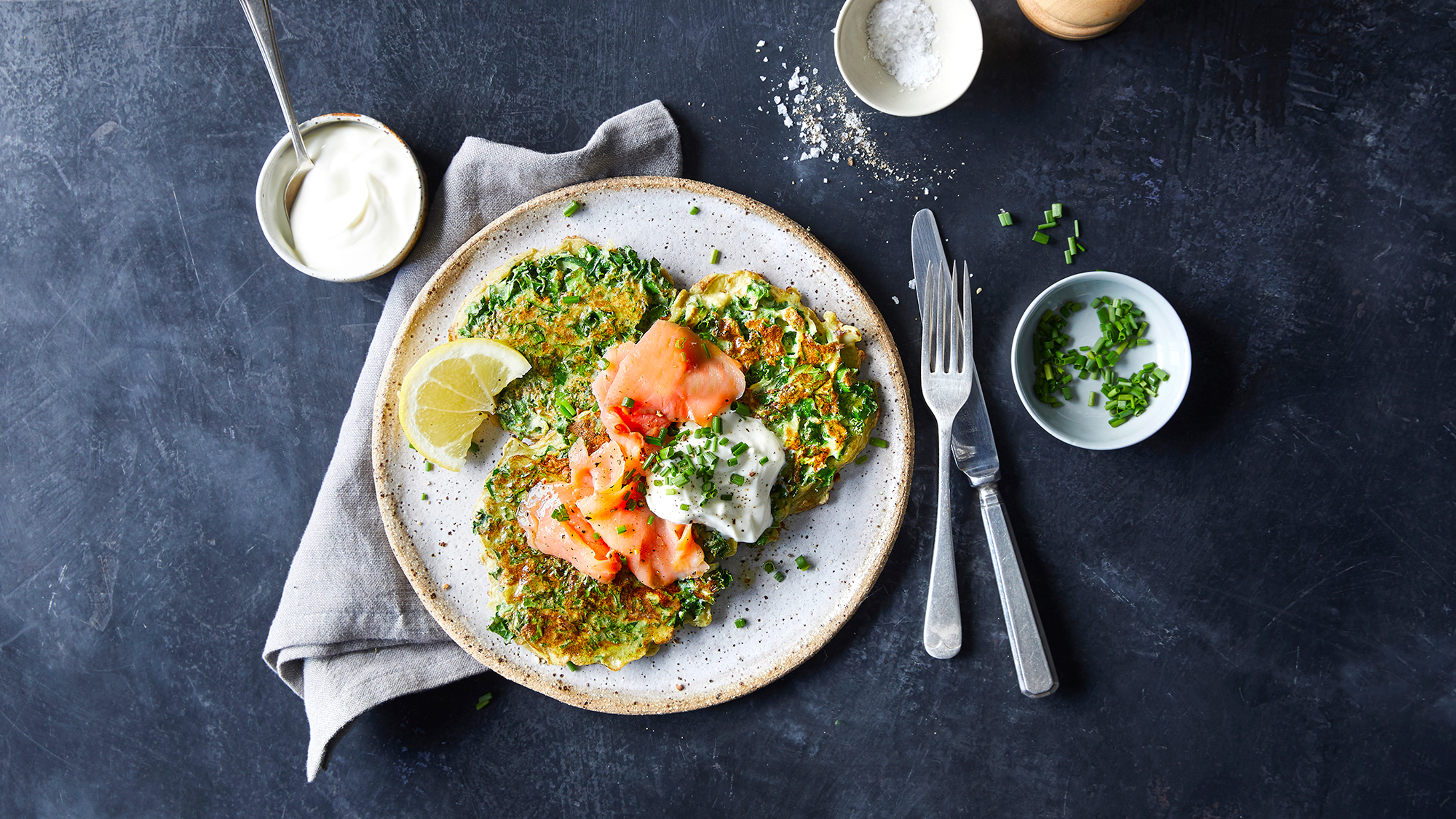
One great thing about circadian fasting? Big breakfasts – like our Kale & Zucchini Fritters with Salmon – are absolutely on the menu.
How legit is the research into circadian rhythm fasting?
The research linking irregular eating habits and health issues is fairly new – and most studies so far have been done on rodents. That said, the small studies of actual humans have thrown up some interesting results.
A 2018 study of 8 men (yes, only 8!) with pre-diabetes found that early time-restricted eating lowered blood sugars, blood pressure, oxidative stress (which can lead to cell damage), and reduced appetite at night. Note: By “early”, we mean this study had participants eating dinner before 3pm – an hour even your grandparents might balk at!
A 2020 study of 19 people with metabolic syndrome (a cluster of disorders linked to increased risk of diabetes, stroke and heart disease) found that restricting eating to a 10-hour window had several beneficial results. These included weight loss, healthier body composition (including decreased waist circumference), lower blood pressure, lower levels of bad cholesterol and “more restful sleep”.
Participants selected their own 10-hour eating window, e.g. between 8am and 6pm, and fasted for the remaining 14 hours of the day. While the majority did choose a daytime window, it’s possible the fasting on its own (regardless of timing) created positive outcomes.
So does it really matter what time of day you eat?
When it comes to eating, the most important factors remain what you eat (nutritious whole foods) and how much (enough to fuel your physical activity).
If you’re considering giving circadian rhythm fasting a go, keep in mind that most of the information you’ll find is geared to people who want to maintain or lose weight, or to deal with specific health problems linked to obesity.
If you’re training to build muscle, you’re best to steer clear. “There is excellent research regarding the role of a pre-bed protein snack on muscle mass gains,” Lisa points out. Again, keeping it whole and healthy is most important.
Restricting your eating window – whether following a fasting diet or not – can help you to eat fewer calories, avoid mindless or unhealthy snacking, and to be more focused on what you eat. But it’s not for everyone. Until there is more research into circadian rhythm fasting, just continue to be smart about fueling your body.


