

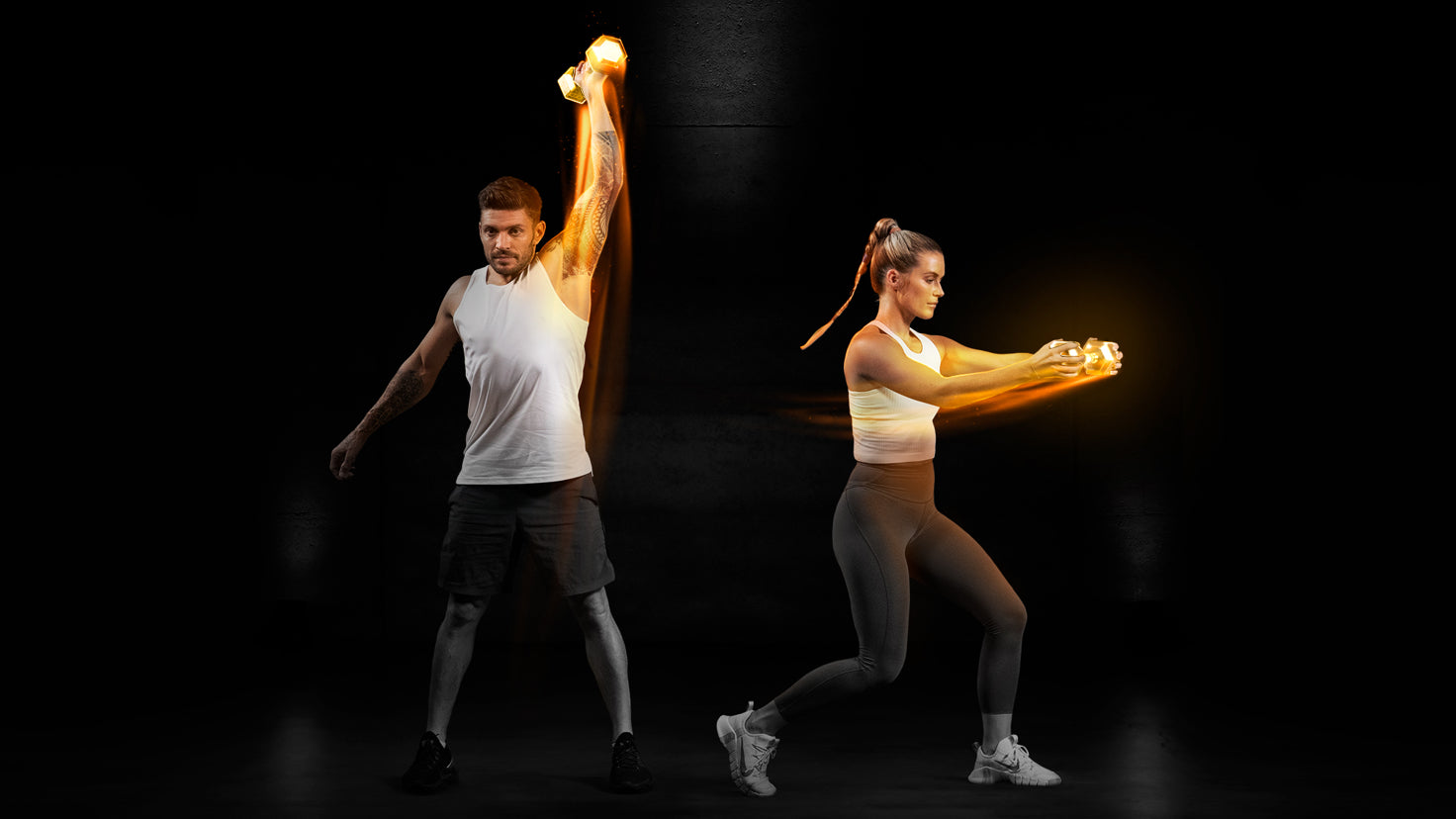
There’s a lot to love about dumbbells. One pair, and you’ve got a strength workout. Two pairs, and you’ve got a next-level challenge – just like Luke and Alexz are throwing down in Centr Ignite.
While a simple set of dumbbells can be the most effective tool in your home gym, they can also do some serious damage if not used correctly (and we don’t just mean to your toes and floorboards). We’ve lined up 8 of the most common dumbbell exercise mistakes you could be making, and the expert tips you need to get it right and get results.
Tip 1. Not too heavy, not too light
Like Goldilocks, the aim is to get your dumbbell selection just right. The weights you pick up should be heavy enough to create the resistance needed to make muscle, while light enough to not compromise good form. Your trainers will help you nail that balance with their advice on choosing the right weights for your workouts.
It’s important to remember that weight selection is not a ‘set and forget’ process. As you get stronger, you’ll need to keep challenging your muscles by increasing the weight. The type of exercise will also play into how heavy you lift. For instance, in Centr Ignite you’ll notice Luke and Alexz switching weights for a move like dumbbell shadow boxing – on dynamic exercises such as this, lighter weights allow you to focus on keeping your hands up to smash out more reps and get a better workout.
Tip 2. No plyo until you’re ready
Trainers progressing your exercises with plyometric elements? They’re sneaky like that! The thing is, exercises like weighted lunges are already a challenge without jumping, so you shouldn’t be adding a plyometric movement until you’re able to complete a regular set without instability. Don’t be afraid to take the exercise back to basics until you’re ready. Luke’s complete guide to lunges is here to help you nail it.
Are you ready to jump? Make sure you nail the static version of an exercise before adding plyometrics.
When you feel ready to add a jump, it’s a good idea to include glute and core activation exercises in your warm-up, such as bridges and planks. This will switch on your glutes to power explosive movements and get your core ready to protect your spine from impact. It’s also important to stay light on your feet in plyometric exercises, to protect your knees.
Tip 3. Save your shoulders
An upper-body workout is not the time and place to bust out the chicken dance, people! When you’re performing a move such as upright rows, it’s easy to flap your elbows up too high, which will place stress on your shoulders. Keep your shoulders down, and as you pull the weights up, stop just before your elbows reach shoulder height. That way you’ll get a great shoulder workout, rather than shoulder pain.
Tip 4. Be a tower of strength
While we’re on the subject of upper-body workouts, throwing your hands in the air and waving them like you just don’t care doesn’t really fly when you’re training with dumbbells. If you’re performing exercises where the weights are raised overhead – such as dumbbell halos and dumbbell overhead tricep extensions – control through your torso is essential. If the weight is too heavy or your abs aren’t tight, your core and lower back will attempt to compensate.
Going up? Keep your torso controlled when your dumbbells are going over your head.
When you set up for an overhead dumbbell move, keep your back straight, lock your shoulders down away from your ears and engage your core. If you still feel your torso moving around or your lower back arching as you lift upward, you can try a split stance (pushing your rear toes into the floor to help engage your glutes) or lower the weight until you have better control.
Tip 5. Don’t rush the dumbbell deadlift
Everyone wants to deadlift like a pro, but pros know you can’t rush this classic lift. Start with light weights and get a grip on the basics with Ashley’s complete guide to deadlifts.
When dumbbell deadlifts are coming up next in your workout, take the time to set up with good form. Your spinal position – keeping your back straight and flat – is everything. So engage your core and your lats (at the back of your ribs) and drop your shoulders down. When you begin to lift, keep those dumbbells close to your body (don’t let them drift forward) to avoid putting excessive force on your lower back.
Tip 6. Eyes on the prize
Where your eyes go, your head and chest will follow. Unfortunately, it’s all too common to see heads dangling and chests drooping forward in weighted squats. So instead of staring at your shoes or checking out all the other lifters in the gym when you drop into a set of dumbbell goblet squats, push your shoulders down and back, engage your lats and keep your eyes fixed on a point directly in front of you.
Keep your chest up and your eyes forward during dumbbell squats.
Tip 7. Don’t wink while you squat
Posterior pelvic tilt, AKA butt winking, is a form fail in squats where your back curves out and your butt tucks in toward your legs. And it’s especially dangerous for your back when you’re squatting with heavy dumbbells.
So before you pick up the dumbbells, nail your form with Luke’s complete guide to squats. Then next time your trainer drops weighted squats on you in a workout, focus on keeping everything neutral – and only squat as low as you can without your back or butt rounding.
Tip 8. No more floppy core
In case we haven’t mentioned this often enough: engage your core when training with dumbbells! If you don’t brace your ab muscles in a weighted exercise variation, it can lead to back and neck pain.
Next time you see a move like dumbbell curtsy lunges coming up in your workout, remember it’s not all about your legs. Switch on your abs by including planks and bird dog in your warm-up, or run through this quick core activation session with Sylvia. And when you’re mid-workout, don’t be afraid to stop and reset your lunge form if you feel that core getting floppy.
Now you know what not to do, grab your dumbbells, and let’s get to work!


Leave a comment
This site is protected by hCaptcha and the hCaptcha Privacy Policy and Terms of Service apply.