
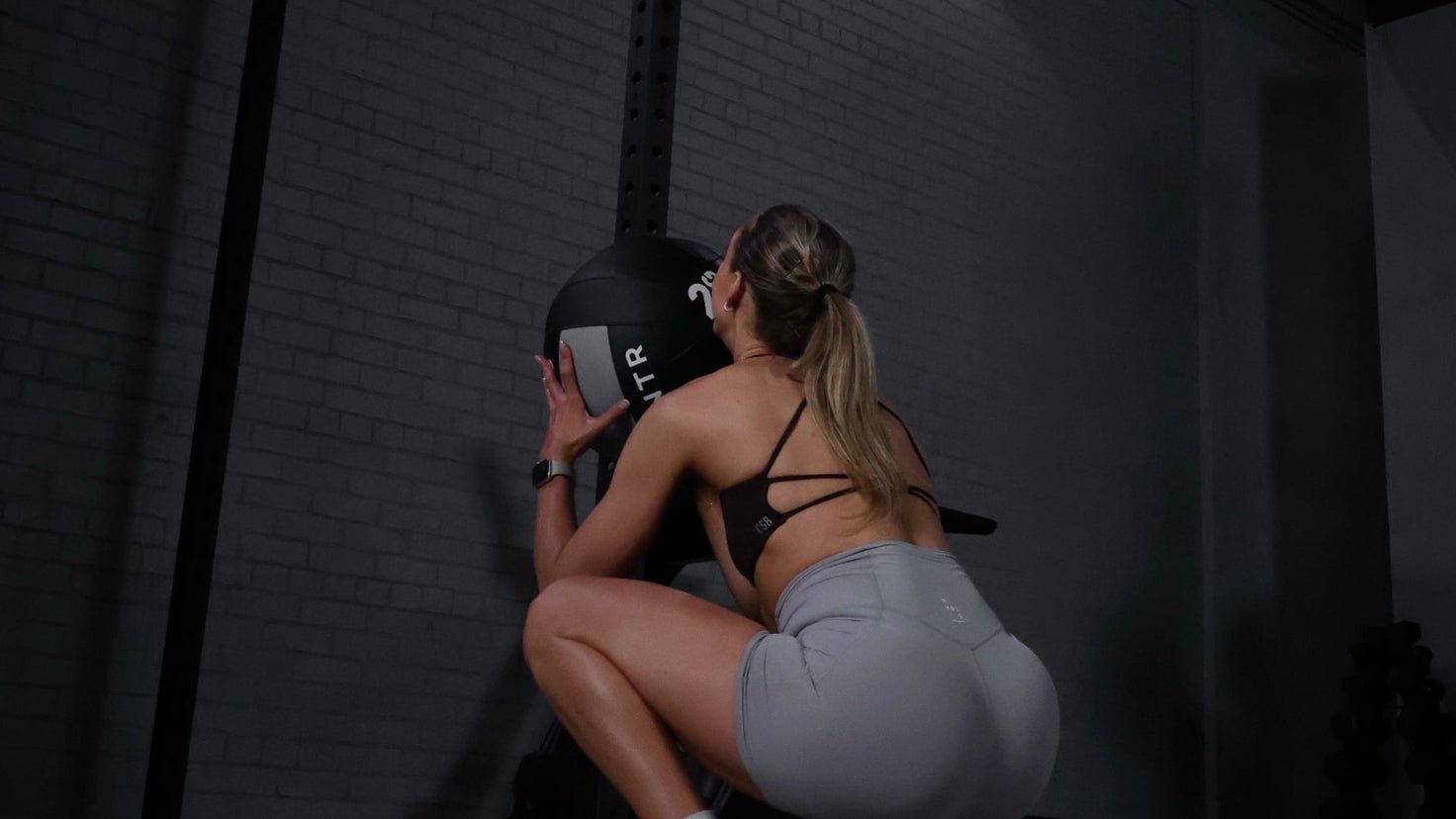
Every session in this program uses RPE to guide your effort. Understanding what the numbers mean and how to apply them is one of the most important skills you will develop across these 12 weeks.
What is RPE?
RPE stands for Rate of Perceived Exertion. It is a simple 1-to-10 scale that measures how hard an effort feels, not just what your watch or weights say. It accounts for everything: sleep quality, stress, hydration, nutrition, and where you are in your menstrual cycle. Two sessions with identical weights and paces can feel completely different depending on how your body is responding that day.
RPE lets you auto-adjust. Instead of rigidly chasing a number, you train at the right intensity for your body on that specific day. That is how you train hard and sustainably.
The RPE scale
RPE 3-4: Easy / Conversational
Breathing is comfortable. You can speak in full sentences without pausing for air. You feel like you could maintain this effort for a very long time. This is your warm-up pace, your cool-down pace, and your active recovery intensity.
RPE 5-6: Moderate / Controlled
You are working but still in control. You can talk in short phrases. Breathing is deeper but not strained. You could sustain this for a long session but you are aware you are working. This is your Zone 2 running pace and your taper-week station intensity.
RPE 7: Comfortably Hard / Threshold Edge
Speech is limited to a few words at a time. You can hold this effort for several minutes but you do not want to. This is where most of your productive training happens. Threshold running sits here. Strength work in Phase 1 sits here. It is hard enough to drive adaptation but controlled enough to maintain form.
RPE 8: Hard but Sustainable
Talking is difficult. Focus is high. You are counting down reps or watching the clock. You can only maintain this in structured work-and-rest intervals, not continuously. Station work at race weight in Phase 3 feels like this. The back half of your race simulation will push here.
RPE 9-10: Maximal / All-Out
Very intense. Breathless. Only sustainable for very short bursts. In this program, you will rarely touch this zone outside of short race finishes or testing moments. Most work is deliberately capped at RPE 8 to 8.5 to protect recovery and consistency.
RPE across the 4 phases
Your target RPE shifts deliberately across the program:
- Phase 1: Foundation (Weeks 1-3): RPE 6-7. You are learning movements and building your base. Every session should feel controlled. If you are regularly above RPE 7, reduce the load.
- Phase 2: Development (Weeks 4-7): RPE 7-8. Intensity increases. Threshold running, heavier station loads, progressive overload. This is where training starts to bite, and that is the point.
- Phase 3: Competition Prep (Weeks 8-10): RPE 7-8 with race-pace efforts. Simulation days will push beyond RPE 8 in the final stations. You need to experience what the back half of a HYROX race feels like.
- Phase 4: Taper (Weeks 11-12): RPE 5-6. Volume drops sharply. You should finish every session feeling refreshed, not fatigued. If a taper session makes you tired, you went too hard.
RPE and your cycle
For cycle-aware training, RPE becomes your daily feedback loop. The same workout can feel different depending on where you are in your menstrual cycle, and that is completely normal.
Follicular Phase (Days 1-14): Rising oestrogen supports energy, recovery, and strength. You may naturally find that the same pace or load sits at a lower RPE. Take advantage of this: push the higher end of rep ranges, add the extra sets where indicated, and run the faster end of your pace targets. Your body can handle more stimulus and recover faster.
Luteal Phase (Days 15-28): Declining hormones reduce recovery capacity and can increase perceived effort. The same weights and paces may feel one to two RPE points harder. This is not a sign of lost fitness. It is your body's normal hormonal response. Maintain your loads but reduce volume by approximately 20%. Drop one set on compound lifts if needed. Keep the target RPE the same and let your pace or load adjust naturally.
During menstruation: Energy can vary significantly. Some women feel strong; others feel depleted. Use RPE to guide your effort honestly. If RPE 7 is your target and a lighter load gets you there, that is the right load for that day.
The key principle: the target RPE stays the same. The pace or load adjusts to get you there. That way, the training stimulus is appropriate even when your body feels different from week to week.
Common RPE mistakes
- Ignoring it. RPE is not a suggestion. If the program says RPE 6-7 and you are consistently at RPE 8-9, you are overtraining. Scale back.
- Faking it. Be honest with yourself. If an effort feels like RPE 8 but you want it to be RPE 7, it is RPE 8. Adjust accordingly.
- Comparing to someone else. RPE is personal. Your RPE 7 is unique to your body, your fitness, and your day. It has nothing to do with the person next to you.
- Not adjusting for your cycle. If you trained at a certain pace last week during your follicular phase and this week you are in your luteal phase, the same pace will feel harder. That is expected. Do not chase last week's numbers.
Practical tips
- Use the talk test. Can you speak in full sentences? That is RPE 5-6. A few words? RPE 7. Cannot talk? RPE 8+. This is the simplest and most reliable RPE check.
- Check in mid-set, not after. RPE at the end of a set is always higher. Assess your effort during the working portion.
- Track it. Note your RPE alongside your loads and paces in a training log. Over time, you will see clear patterns that help you plan your training and your race.
- Trust it on race day. Your simulation data from Phase 3 gives you pace targets, but RPE is your real-time guide. If your target pace feels like RPE 9 on the first run, you are going too fast. Adjust.
For more on how RPE applies within each training block, read the phase guides: Phase 1, Phase 2, Phase 3, and Phase 4. For the full program overview, read the HYROX for Women Program Guide.


Leave a comment
This site is protected by hCaptcha and the hCaptcha Privacy Policy and Terms of Service apply.