
Centr Power at Home: How to use resistance bands Centr Power at Home: How to use resistance bands

Centr Team
14 Jun 2022

You don’t need a lot of equipment to max your muscle with Centr Power at Home, but you do need the right equipment.
Resistance bands and anchor points to secure those bands are a crucial part of the program. So before you start training, let’s make sure you’ve got the right gear to go all the way.
Important: Always ensure your anchor point is fixed and sturdy, as flying furniture can cause injury. Do not suddenly release the band, as rubber moving at high velocity can also cause harm.
How to find the right resistance bands
There are a LOT of resistance bands on the market, but you shouldn’t just grab any old kind.
We recommend long loop bands for these workouts – sometimes called power bands, resistance training bands or pull-up bands.
To get started, you will need at least two different levels or strength of band:
1. A lighter band
Your lighter band is stretchier and used to add intensity to bodyweight moves like banded push-ups.
2. A heavier band
Your heavier band is used for exercises like banded lat pull-downs and seated banded rows.
Bands are often color coded (e.g. yellow for lighter, black for heavier), but this can differ from brand to brand so be sure to read the fine print or ask for advice.
Don’t forget the progressive overload principle: just like weights, you will need to increase the resistance you’re training with so that your body will adapt and grow stronger. So it’s likely that as you get stronger and your bands no longer challenge you, you will need to invest in heavier/stronger bands.
Finding your anchor points
The resistance band exercises you’ll be doing with Centr Power at Home require anchor points – safe, sturdy places you can attach your bands.
This can be done DIY style with something solid already in your home, or by purchasing and installing anchor points.
There are a range of anchor systems available, from metal loops that attach to your wall (some require drilling, others don’t) to anchors that hang over doors. Some resistance band packs come with these included. You should not attempt to attach resistance bands to your door without an anchor point designed for that purpose.
Important: Be smart when buying anchor points, as not every option will be suitable for your situation. For example if your doors are loose, your walls are crumbling or you’re in a rental.
You will need three anchor points for Centr Power at Home:
1. Low: Near your ankles.
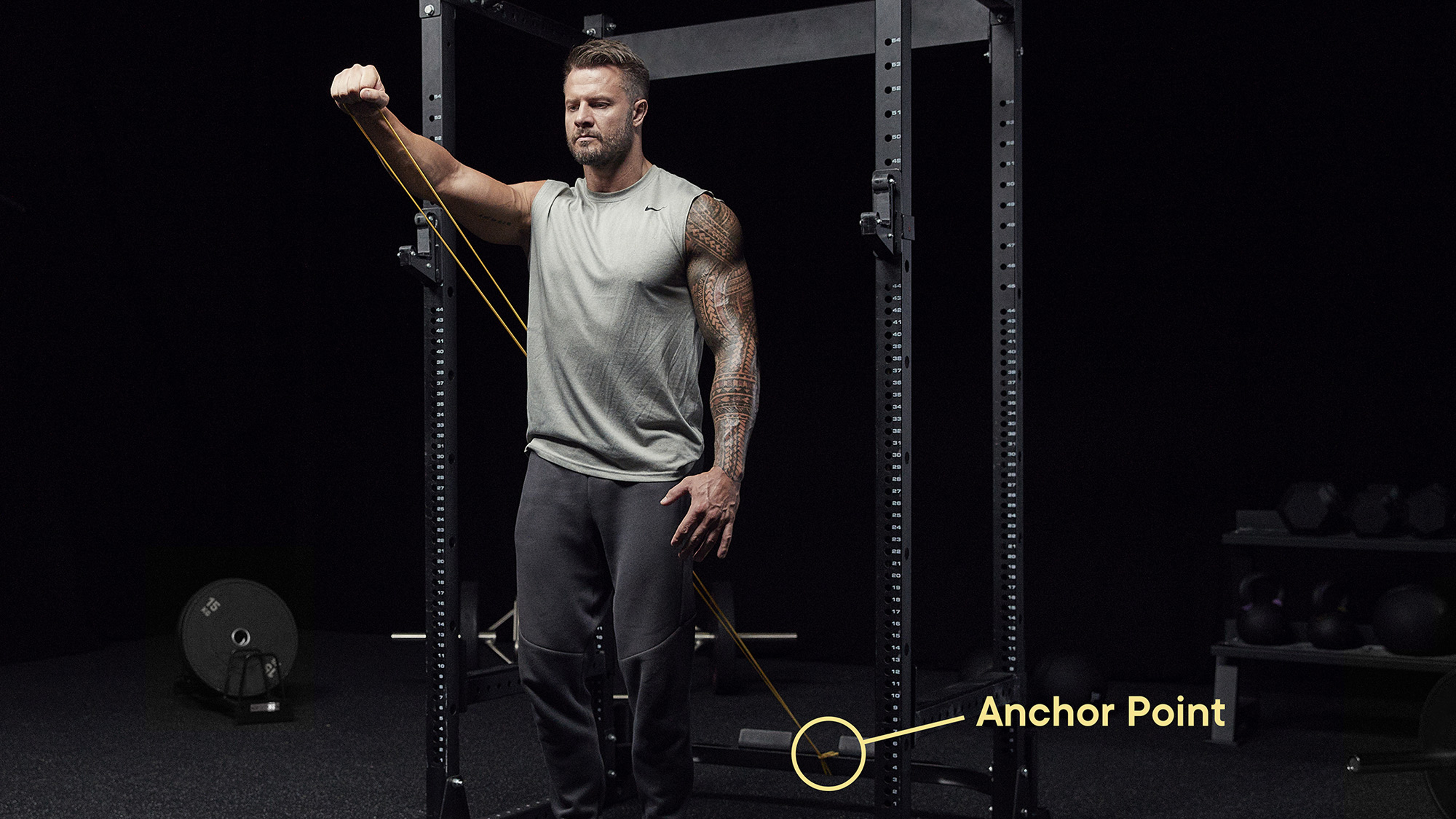 1/3
1/3
2. Medium: Roughly level with your chest.
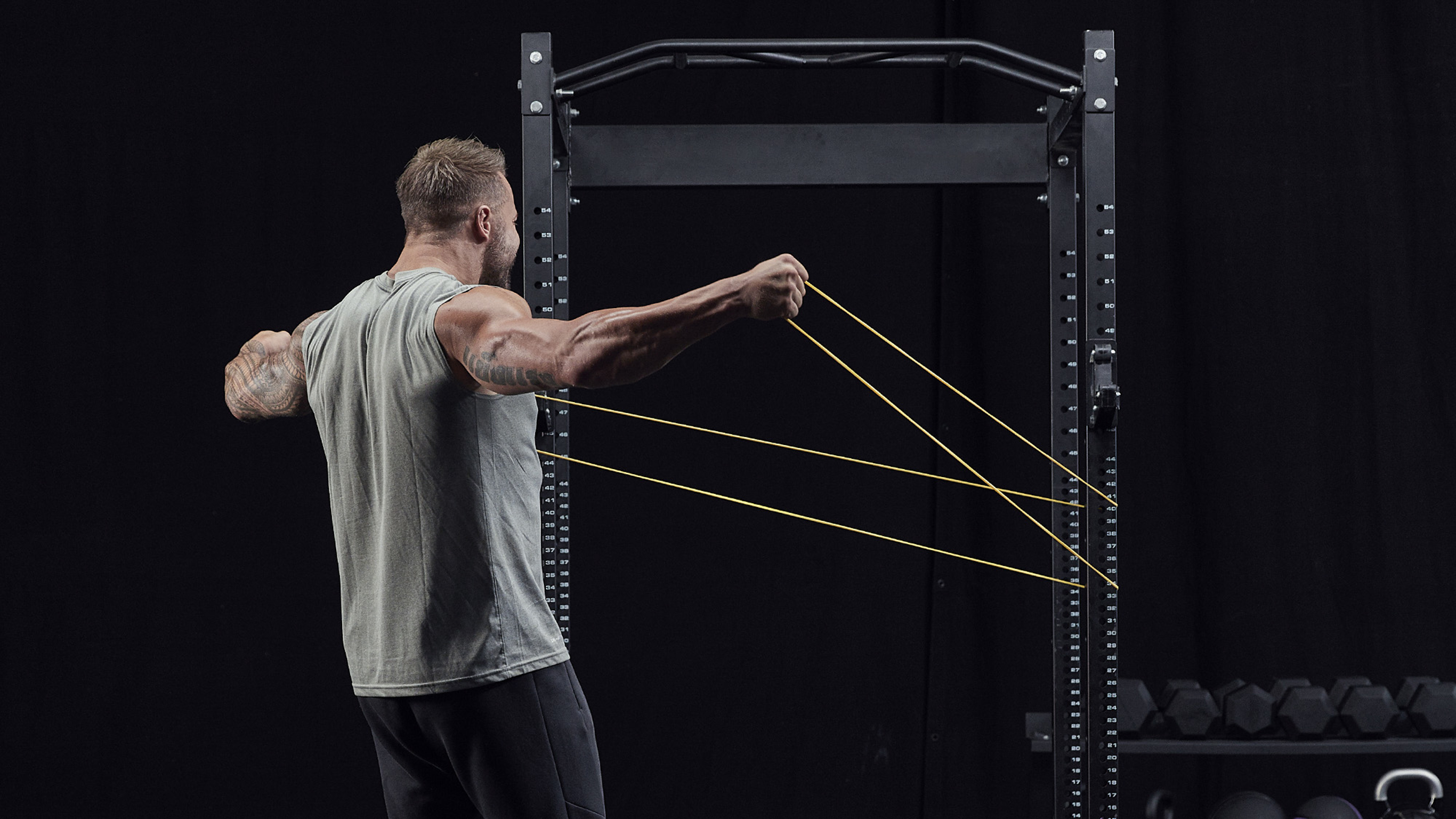 2/3
2/3
3. High: Above your head
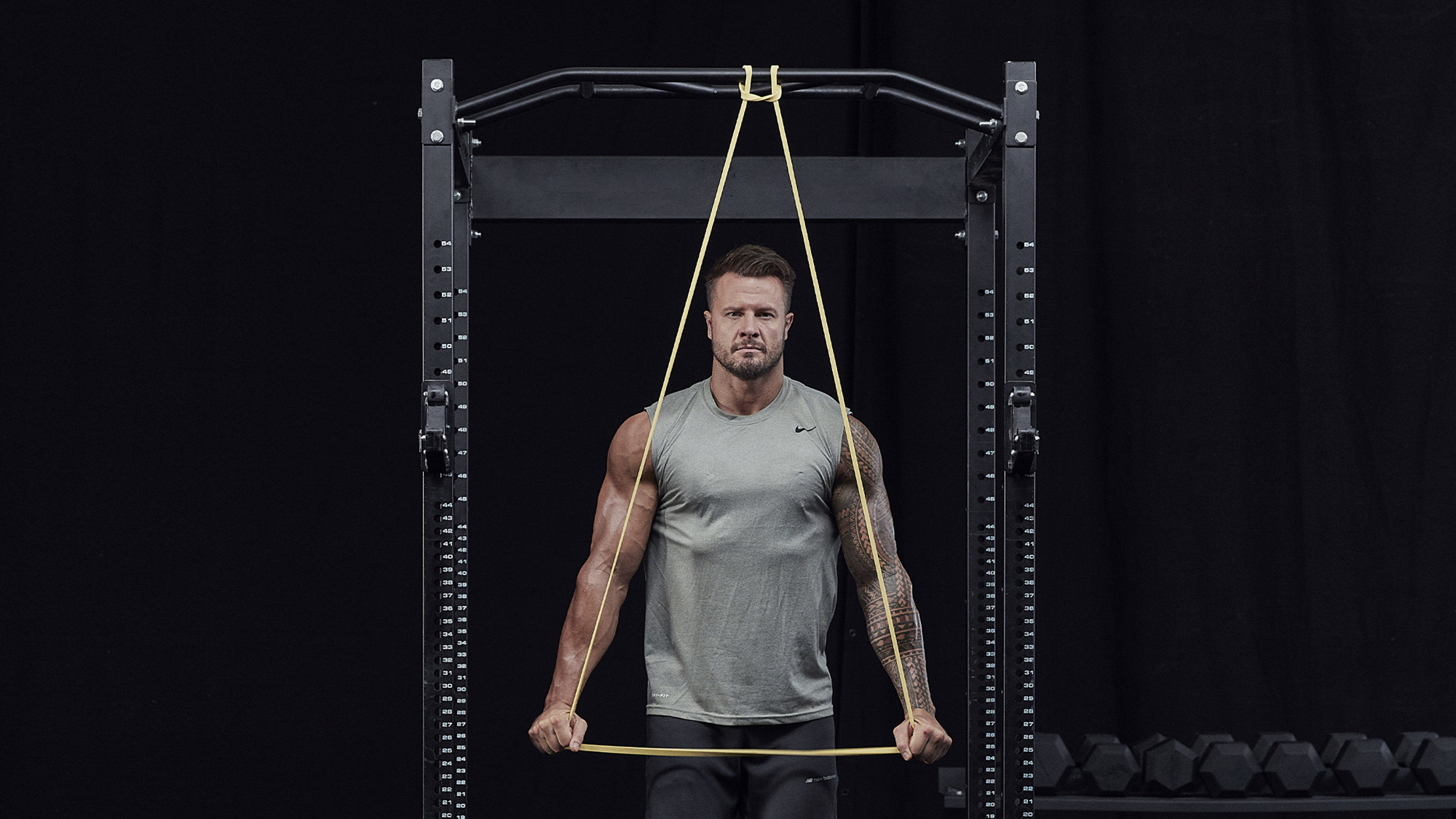 3/3
3/3
Can I DIY my anchor points?
In some cases, yes. Let’s take a look at what could be suitable for anchoring your bands.
- Supporting pole or exposed beam in your house or porch.
- An in-ground rotary clothesline.
- A squat rack or frame.
- Your own body (e.g. you can loop the band around your own foot for some pull exercises).
Tip: Can’t find a high anchor point? You can do the same exercise, but change your position (e.g. kneeling) so that the plane of motion stays the same.
Important: Always ensure your anchor point is sturdy. Do not attach it to furniture which isn't fixed.
4 essential tips for using your bands
Resistance bands may seem like a simple bit of gear, but these handy hacks will help you get the most out of them.
1. The band should be tight enough that there is no slack (it’s not flopping around), while still allowing you to perform the exercise through a full range of motion. If you cannot complete the movement, loosen the tension in the band by moving closer to your anchor point.
2. As you get stronger, you can increase the intensity of resistance by shortening the band to remove slack.
3. Generally, the wider the body of a band, the stronger and harder to stretch out it will be. Keep this in mind if you’re looking to buy new bands.
4. If the bands rub on your skin as you increase intensity, a pair of training gloves can help you grip without irritation.
Important: Always ensure your anchor point is fixed and sturdy, as flying furniture can cause injury. Do not suddenly release the band, as rubber moving at high velocity can also cause harm.


