
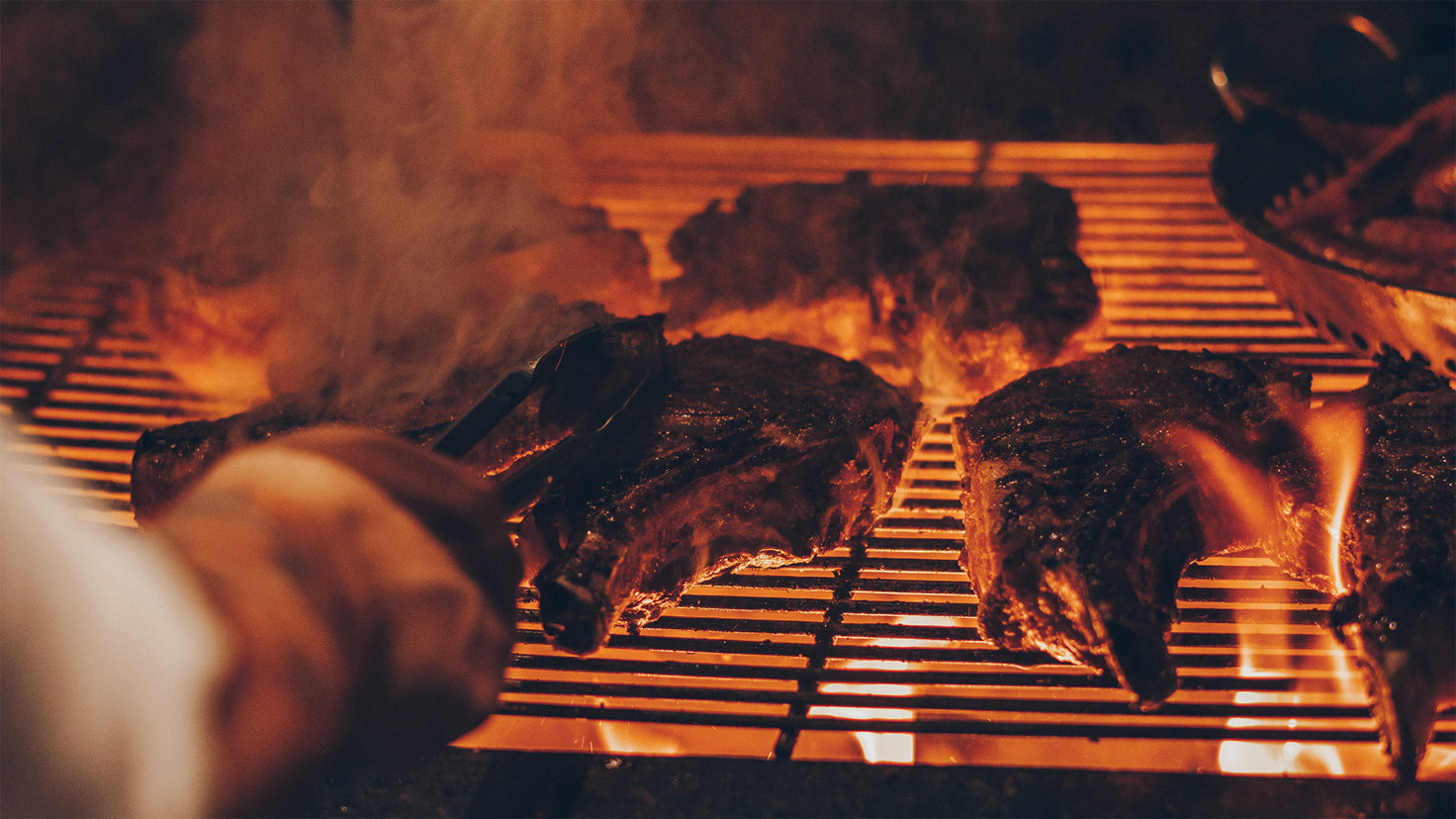
Before you fire up the barbecue, there’s something we need to talk about: red meat. Don’t worry, we’re not going to take it away from you! There just may be a better way to look after your tastebuds, your health and the environment.
Fun fact: the US, Australia, New Zealand, Argentina and Spain top the meat-eating charts, averaging more than 220lbs/100kg per person, or roughly half a cow each per year.
Wait, haven’t initiatives such as Meat-free Monday and conversation-sparking documentaries helped to lower meat consumption? The numbers show that consumption is actually still on the rise, not just in growing markets like Brazil and China, but in the US and Europe, too.
While the balance is changing in some countries – poultry (e.g. chicken, turkey) now makes up half of all meat consumption in the US – it’s red meat (e.g. beef, pork, lamb) that makes the headlines… and causes a lot of the problems.
But this is no cow hit job. Lean red meat is a quality source of nutrients, in particular protein, iron, zinc and vitamin B12. So there is good reason to enjoy that perfectly cooked steak. The problem is, as the BBC put it, our “meat consumption goes far beyond basic nutritional benefits”.
Most guidelines recommend eating no more than three portions of red meat per week, weighing in at 12-18oz or 350-500g. So what are the drawbacks if we consistently eat more?
Trouble sleeping
If red meat is on the menu every night, your sleep could take a hit. Studies have shown a link between excessive meat consumption with poor quality and shorter duration of sleep. While there’s a common belief that red meat takes longer to digest than other foods, it’s not necessarily your gut working overtime that will keep you up at night. Scientists suggest it could be the effect of high amounts of protein on amino acids that help to synthesize the hormones that regulate your sleep/wake cycle.
Links have also been found between high red meat consumption and increased snoring/sleep apnea, which is bad news for your long-term health (and everyone within earshot of your bedroom).

Move over pepperoni: our Pesto & Mushroom Pita Pizza is super tasty and high in protein.
Missing out on other essentials
While that T-bone taking up your entire plate looks impressive, it doesn’t leave much room for vegetables, whole grains and all those other nutrient sources you need to perform at your best. Think of that Healthy Eating Pyramid you learned about in school (and its newer buddy the Healthy Eating Plate) and aim for a good balance.
Long-term health risks
Over the past few years, studies have hit the headlines for highlighting the cancer risks of processed meat (such as hot dogs, bacon and salami), and red meat. Eating too much red meat can increase your risk of bowel cancer and other cancers, as well as your risk of heart disease.
Another study sparked confusion by putting red meat back on the menu: claiming the risk was low on the basis of “low-certainty evidence”. While it may have caused a ruckus, the weight of scientific opinion remains firmly on the side of reducing red meat consumption.
Advanced Sports Dietitian Lisa Middleton tells us moderation is key. She suggests eating red meat in small portions and avoiding meat that has been blackened through grilling or barbecuing – as this “creates by-products that may have a carcinogenic effect,” Lisa says.
And don’t forget… the environmental impact
Even the most red-blooded of meat-eaters have to admit that large-scale factory farming (which produces 95 percent of meat and dairy in the US) is bad for the environment. The meat industry is a big contributor to climate change, with beef cattle, in particular, having an oversized impact on greenhouse gas emissions, soil erosion, water pollution and beyond.
If we all ate a bit less red meat the positive impacts could be huge. One 2020 study found that if every American reduced their beef, pork and poultry intake by just a quarter, 82 million metric tons of greenhouse gas emissions would be saved each year.
While your Meat-free Monday alone may not be headline news, you can make a local impact and minimize the environmental downsides by shopping for locally farmed and organic meat wherever possible.



Leave a comment
This site is protected by hCaptcha and the hCaptcha Privacy Policy and Terms of Service apply.