
Sore wrists? We can help with that Sore wrists? We can help with that

Centr Team
26 Jan 2022

You’re all fueled up, you hit the workout mat and then… oh no… wrist pain! When that soreness strikes, it can be hard to stay motivated and keep making progress. The good news is, we’re here to help.
Whether you’re adding load and changing grips when lifting weights, or taking on a no-equipment program like Centr Unlimited or Centr Unleashed, you need to take care of your wrists. The nature of bodyweight training in particular means you’ll be putting weight through your wrists in the plank or push-up position in many exercises, so going in prepared and exercising with good form is essential.
To help you minimize any pain, no matter what training you’re doing, let’s take a look at the potential issues affecting your wrists, and how to fix them.
Important: If your wrist pain is severe, debilitating or ongoing, you should discontinue exercise and seek professional advice from a doctor or physical therapist.
Reason #1: You’re not warming up
Sore wrists can be a symptom of not warming up properly. So how do we fix that?
Don’t skip the warm-up: On Centr, your warm-up is specific to your workout target. If something is feeling tight or you’re getting a great stretch on a particular movement during your warm-up, repeat that exercise – that is your body telling you what it needs.
Warm up your entire upper body: When dealing with wrist pain, it’s important to warm up your back, shoulders and elbows as well as your wrists, in case pain is caused by poor mobility elsewhere.
Try a specific wrist warm-up: If your wrists require some extra love, let Tahl show you how to warm up your wrists, or add Sylvia’s wrist warm-up to your routine. Try both to learn which helps you train with more power and confidence.
 1/3
1/3
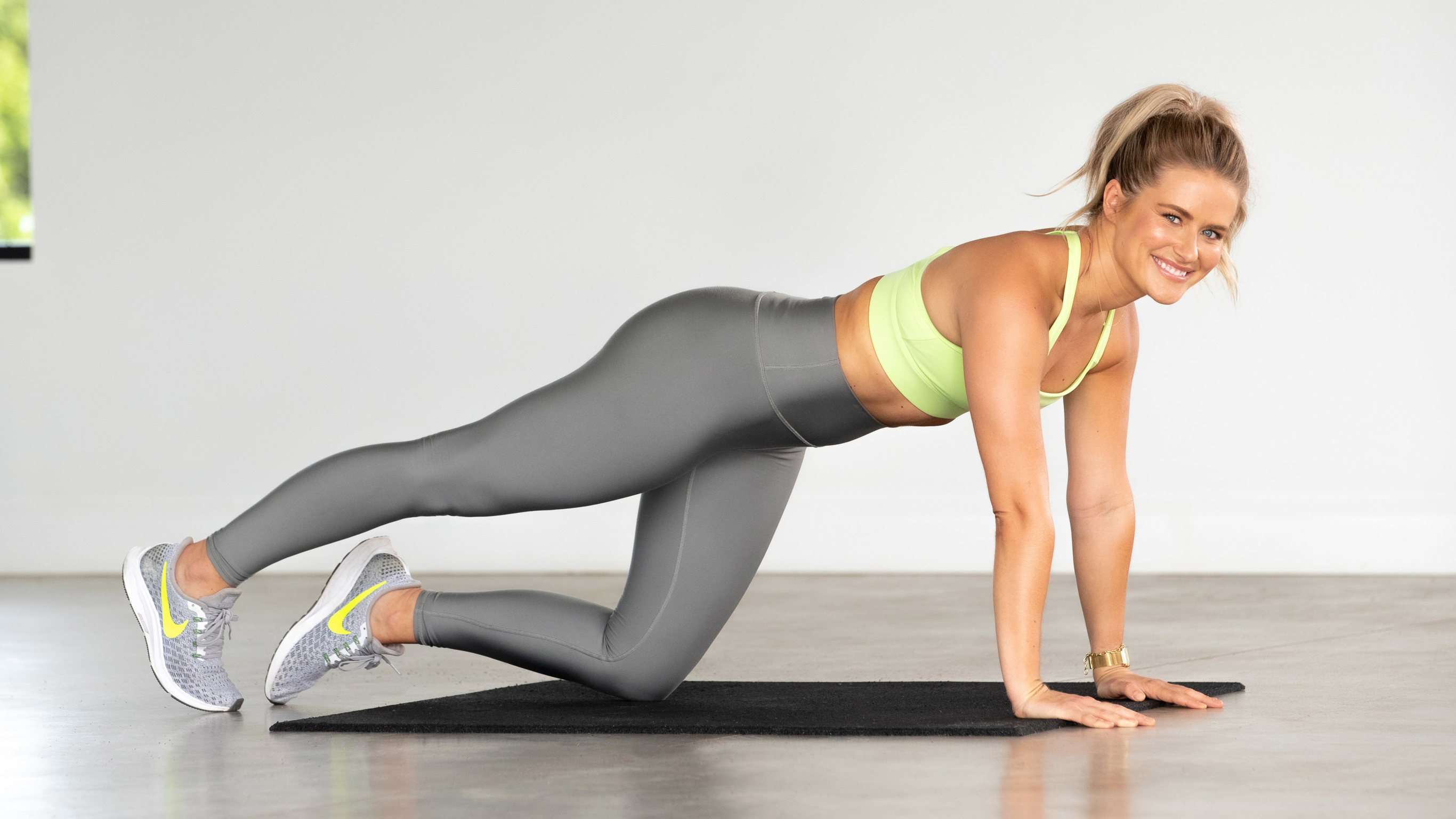
Look at those lovely straight lines – Alexz has nailed good plank form!
Reason #2: Your form needs work
Planks, push-ups and other exercises where your wrists have to support your body while you’re facing the ground – which you’ll find plenty of in Centr Unlimited – can cause soreness, especially in beginners. This is why it’s so important to exercise with good form. Follow these tips to get your form right.
Keep your body ‘stacked’: When performing standard plank, good form means your hands are on the mat directly under your shoulders – your shoulders, elbows and wrists should form a straight line, and your fingers should be pointing forward. This ensures your weight is evenly distributed.
Keep your hands ‘active’: Don’t just plonk your hands passively on the mat. Spread your fingers, grip the ground, and, as you perform the exercise, think about pushing the ground away with your fingers and the heels of your hands.
Shoulders back and down: Avoid hiking your shoulders up around your ears, as this can put extra pressure on your wrists.
Reason #3: You’re working out too much
In some cases, wrist pain can be a sign of too much exercise. This may be because your upper body is overly tight, restricting range of motion, or because your joints are inflamed from too much use. So what do you do?
Give it a rest: Recovery is crucial for preventing injury and pain during exercise. Make sure you are taking the rest days in Your Plan or the program you are following, or deload weeks if you are lifting weights.
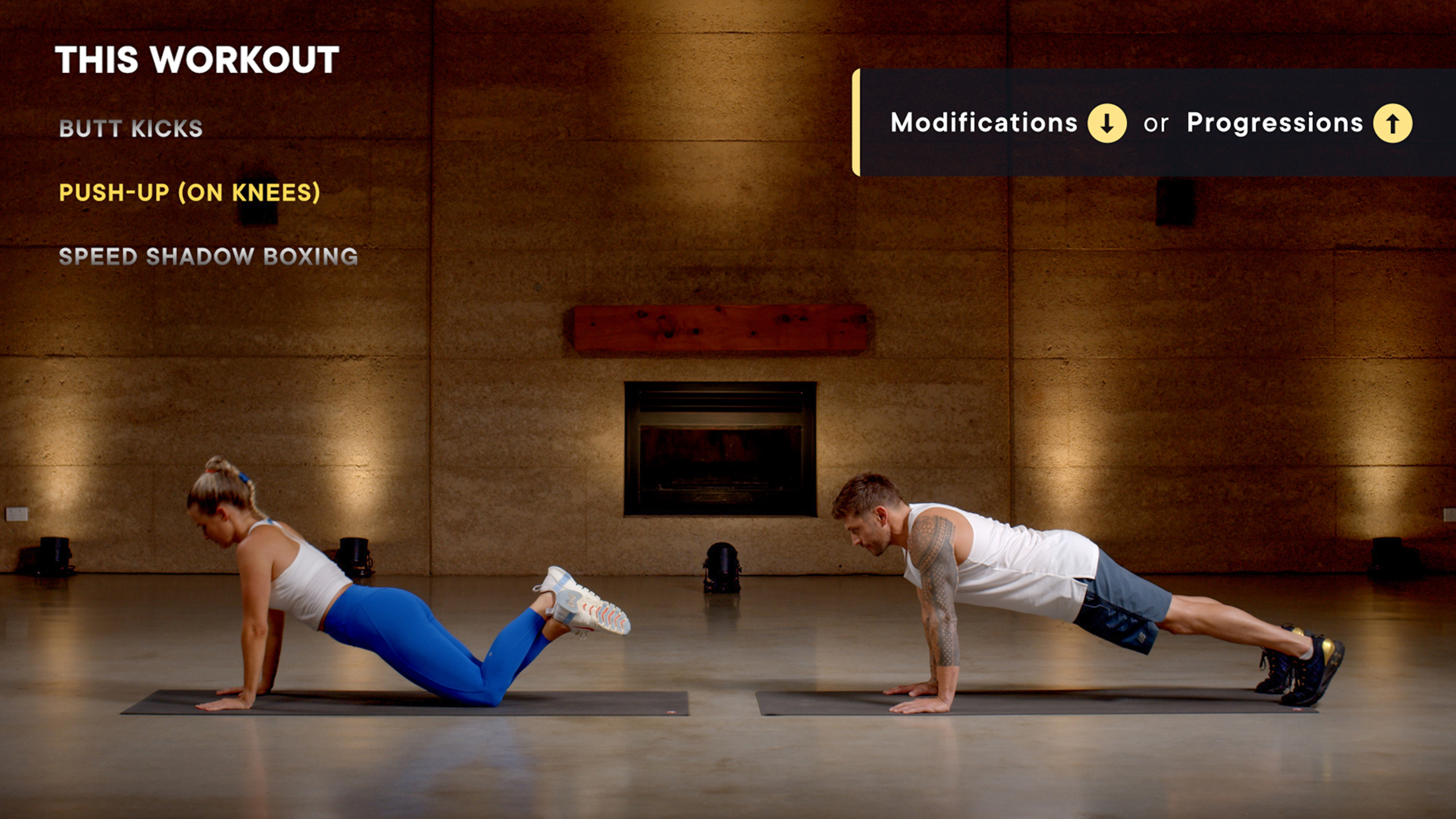
Modify when needed: When you are training, modify exercises to reduce strain on your wrists until the pain subsides.
 2/3
2/3
Modifying exercises can help take a load off your wrists. If you’re doing Centr Unlimited, follow the form that feels right for you.
Reason #4: You’re getting ahead of yourself
Doing something that is too challenging for your body can quickly lead your form to suffer, meaning extra strain on your joints (including your wrists) and other pressure areas.
For instance, you wouldn’t attempt Bobby’s advanced push-ups until you were, well, Bobby. Here’s how to build strength slowly and safely.
Nail the basics: Some more advanced push-up and plank variations call for slightly different hand positions, but you should not attempt these exercises until you can do the basic moves without pain in your wrists. If you’re struggling with push-ups and planks, perform the exercises with your knees on the mat until you build up your strength.
Remember, you’re not a lesser Legend if you opt to do the basic or modified version of an exercise, rather than a progression or variation. As Ashley Joi says: “You’re still doing the work!”
Reason #5: Your forearms are weak or tight
If your forearms are weak, your body might rely more on your wrists when performing weight-bearing exercises, because your forearms don’t have the strength to control the movement. If your forearms are tight, this can impair wrist mobility and function, leading to pain. Get your forearms fighting fit with these tips.
Address any tightness: Our forearms can be a little neglected when it comes to stretching. The arm stretches in this Upper-body opener with Bobby are a good place to start. You can also use a foam roller, a tennis ball or your hands to give your forearms a good massage to ease tightness.
Build strength: You can’t go past the farmer’s walk to strengthen your forearms. All you need for this exercise is two heavy weights – it could be two dumbbells, two kettlebells, or two bags filled with household objects. To do the exercise, safely pick up a weight in each hand and hold them by your side, the same way as you would carry your grocery bags or pails to water the pigs on the farm. (Now do you see where that name came from?) Standing tall, with your shoulders back and down and core tight, walk back and forth in a straight line, taking at least 10 steps in each direction at an even pace. There you go, you’re doing it!
 3/3
3/3
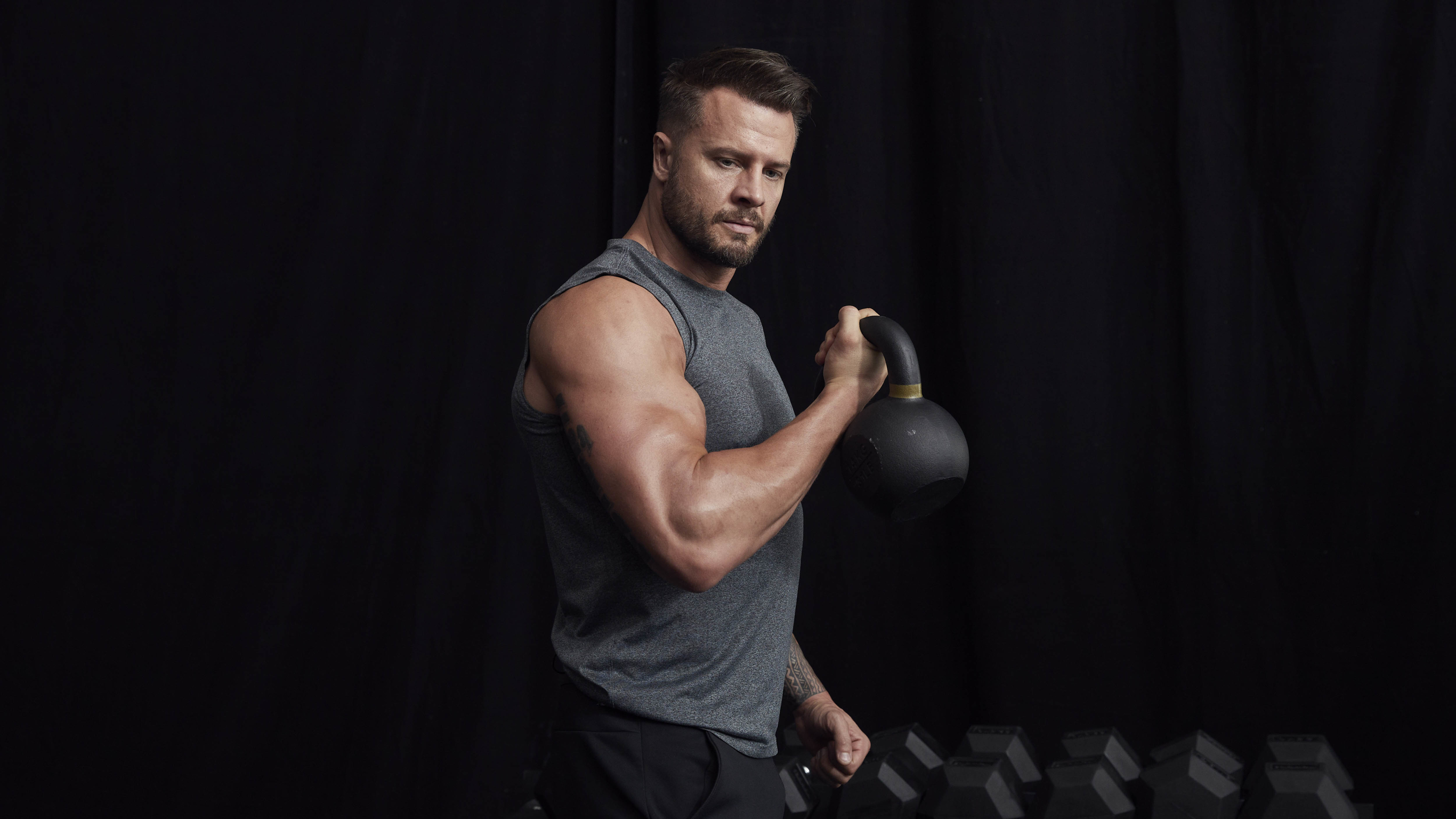
Get a grip on your weights and make sure your wrist and forearm are aligned like Bobby.
Reason #6: Your wrists are bearing the brunt of your lifts
Lifting weights to build muscle? If you experience wrist pain during exercises such as bench presses, overhead press variations or dips, there could be some trouble with your form. Here’s how to address it.
Try adjusting your grip: When lifting weights, your wrists should be aligned with your forearms as much as your body will allow. Check out Bobby in the image above if you’re not sure what we mean. You may find that a neutral grip (imagine your fist handing somebody an ice cream cone) is more comfortable for your wrists than a pronated (overhand) grip on push exercises, or than a supinated grip (underhand) when doing pull exercises.
Modify when needed: If you can’t meet the positional demands of a particular lift, opt to do a modified version of the exercise.
Still sore? Here’s what to do next
Sometimes wrist pain will subside on its own, but it is wise to consult a professional if the soreness is recurring or severe. A doctor or physical therapist should be able to help pinpoint a cause for the pain and then provide suitable treatment. As with any injury or illness, early intervention is key.


