

HYROX is eight stations. Eight times you finish a run and walk into a workout. Knowing what each station demands, how to pace it, and where women-specific technique matters is what separates a good race from a great one.
This guide covers every station in race order with Women's Open race weights, technique priorities, common mistakes, and training tips specific to this program.
Station 1: SkiErg (1,000m)
What it is: An upper-body pull station that also demands core and hip drive. You stand in front of the SkiErg and pull the handles down in a continuous motion for 1,000 metres.
Women's Open weight: Bodyweight (no external load).
Technique priorities: Strong hip hinge and full extension. Pull with the lats, not just the arms. Drive through the hips on every stroke. Think about pushing the floor away as you pull down. Maintain a consistent, sustainable rhythm rather than sprinting the first 200m.
Common mistakes: Arms-only pulling (burning out your biceps before station 3). Standing too upright and losing hip drive. Starting too fast and fading after 500m.
Women-specific note: Upper body endurance is often the limiter on the SkiErg. This program builds your lat and posterior chain strength progressively across all four phases specifically for this reason. The upper body emphasis on Day 3 each week directly supports your SkiErg performance.
Race strategy: Find your rhythm in the first 100m and hold it. A steady 1,000m is faster than a fast 500m followed by a slow 500m. Breathe with your strokes.
Station 2: Sled Push (50m at 102kg)
What it is: Push a loaded sled 50 metres across a turf lane. For Women's Open, the sled is loaded to 102kg total.
Women's Open weight: 102kg total sled weight.
Technique priorities: Stay low. Your chest should be over your hands, hips below your shoulders. Take short, choppy steps rather than long strides. Drive through the balls of your feet. The lower your body position, the more force you transfer into the sled.
Common mistakes: Standing too tall (body position is the single biggest error). Long strides that lose ground contact. Looking up instead of down at the track.
Women-specific note: 102kg is a significant load. Your leg drive and body position matter more than raw strength. The lower body strength work on Day 1 (cable squats, Romanian deadlifts, split squats) builds the specific force production you need. The progressive loading in this program takes you from 60% (about 61kg) in Phase 1 to the full 102kg in Phase 3, so you are never thrown into race weight unprepared.
Race strategy: Commit to your body position from the first step. Breaking the sled free from a standstill is the hardest part. Once moving, maintain short steps and steady pressure. Do not stop mid-lane if you can avoid it. Restarting a heavy sled costs more energy than keeping it moving.
Station 3: Sled Pull (50m at 78kg)
What it is: Hand-over-hand rope pulling of a weighted sled across 50 metres. You stand at one end and pull the sled toward you using the attached rope.
Women's Open weight: 78kg total sled weight.
Technique priorities: Stay low in an athletic stance. Pull from the hips and lats, not just the arms. Establish a consistent hand-over-hand rhythm. Keep the rope taut between pulls. Each pull should be smooth and full-range.
Common mistakes: Standing upright and pulling with arms only (grip burns out fast). Letting slack develop in the rope between pulls. Pulling too fast in the first 25m and losing grip strength for the second half.
Women-specific note: Grip endurance is a critical factor for women at this station. Your grip has already been taxed by the SkiErg and will be needed again for Farmer's Carry (Station 6). This program includes specific grip work through cable pulls, rowing, and farmer's carry training to build the endurance you need across the full race.
Race strategy: Find a rhythm and hold it. Count your pulls if it helps. The sled gets easier to move once it is sliding, so the first few pulls are the hardest. Breathe between pulls. If your grip starts to fail, take a 3-second pause, shake your hands, and resume. A brief reset is faster than a sloppy final 10 metres.
Station 4: Burpee Broad Jump (80m)
What it is: Starting from standing, perform a burpee (chest to floor), then jump forward as far as possible. Repeat until you have covered 80 metres.
Women's Open weight: Bodyweight.
Technique priorities: This is the most metabolically demanding station. Efficiency is everything. Explosive hip extension on the jump, soft landing, controlled step-back (not jump-back) on the burpee descent. Find a rhythm: down, chest, up, jump. Repeat. Consistent distance per rep is more important than maximum single-rep distance.
Common mistakes: Going too explosive too early and burning out at 40m. Jumping back into the burpee instead of stepping back (wastes energy). Not fully extending hips on the jump (shorter distance per rep means more total reps).
Women-specific note: This station is an equaliser. It does not favour upper or lower body strength; it demands metabolic conditioning and efficient movement. The full body power work on Day 5 (kettlebell swings, thrusters, box jumps) builds the explosive hip extension and conditioning this station requires.
Race strategy: Pace this station carefully. It comes after three stations and four runs. Your heart rate will be elevated. Start with a sustainable rhythm and maintain it. Break the 80m into mental segments: 4 blocks of 20m. Focus on one block at a time.
Station 5: Rowing (1,000m)
What it is: Row 1,000 metres on a rowing machine (RowErg). The monitor tracks your distance.
Women's Open weight: Bodyweight (no external load).
Technique priorities: The rowing sequence is legs, body, arms on the drive and arms, body, legs on the recovery. Stroke length matters more than stroke rate. Push hard with the legs, lean back slightly at the finish, then let the arms follow through. On the recovery, lead with the hands, hinge forward, then bend the knees.
Common mistakes: Pulling with the arms first (wastes energy, reduces power). Too high a stroke rate with short strokes (inefficient). Rushing the recovery (the recovery is where you rest).
Women-specific note: Rowing is technical. Women who invest in stroke technique consistently outperform women with more power but poor form. This program develops your rowing across all four phases, building from pacing awareness in Phase 1 to race-distance efforts in Phase 3. The upper body and lat work throughout the program directly supports your rowing power.
Race strategy: Aim for consistent split times across the full 1,000m. Start at your target pace and hold it. If you have practised in training, you will know your target split per 500m from your simulation data. Stroke rate of 24-28 is sustainable for most women. A slow, powerful recovery lets you breathe.
Station 6: Farmer's Carry (200m at 2x16kg)
What it is: Pick up two dumbbells and walk 200 metres. Put them down at the finish line.
Women's Open weight: 2x16kg dumbbells (32kg total).
Technique priorities: Pack your shoulders (pull them down and back). Stand tall with your core braced. Walk at a steady, consistent pace. Short steps, quick turnover. Do not look down; keep your gaze forward.
Common mistakes: Rounding the shoulders forward (loses posture, increases fatigue). Gripping too hard (exhausts forearms unnecessarily; hold firmly but not in a death grip). Walking too fast at the start and having to put the weights down.
Women-specific note: 200m at 2x16kg is a grip endurance test. By this point in the race, your grip has been challenged by SkiErg (Station 1), Sled Pull (Station 3), and Rowing (Station 5). This program builds grip endurance specifically through progressive farmer's carry training, starting with lighter weights in Phase 1 and reaching full race weight in Phase 3. If you can carry the full 200m unbroken in training, you can do it in the race.
Race strategy: Pick up the weights, set your posture, and walk. If you need to put them down, do it once at the 100m mark rather than multiple unplanned drops. Brief, planned rest is better than fighting a failing grip. Breathe steadily throughout.
Station 7: Sandbag Lunges (100m at 10kg)
What it is: Hold a sandbag in a front-rack position and lunge 100 metres. Each step is a full lunge: front knee to 90 degrees, rear knee touches or nearly touches the ground.
Women's Open weight: 10kg sandbag.
Technique priorities: Front-rack hold with the sandbag across your chest. Keep your torso upright. Consistent step length. Knee tracking over toes. Full range of motion on every rep. The challenge is maintaining lunge quality as your legs fatigue.
Common mistakes: Forward lean (shifts load to lower back). Inconsistent step length (makes the station feel longer). Not reaching full depth on each lunge (risks a no-rep if judges are strict).
Women-specific note: The 10kg sandbag is relatively light for Women's Open, but 100m of lunges is demanding on the quads and glutes, especially after six stations and seven runs. The walking lunge work on Day 4 and lower body strength on Day 1 prepare you for the sustained endurance this station requires. The front-rack hold also challenges your upper back and core.
Race strategy: Find a rhythm and hold it. Break the 100m into blocks of 25m or 20m mentally. Maintain your torso position. If your form starts to break down, pause briefly, reset your hold, and continue. Controlled lunges at a steady pace are faster than rushed lunges with rest stops.
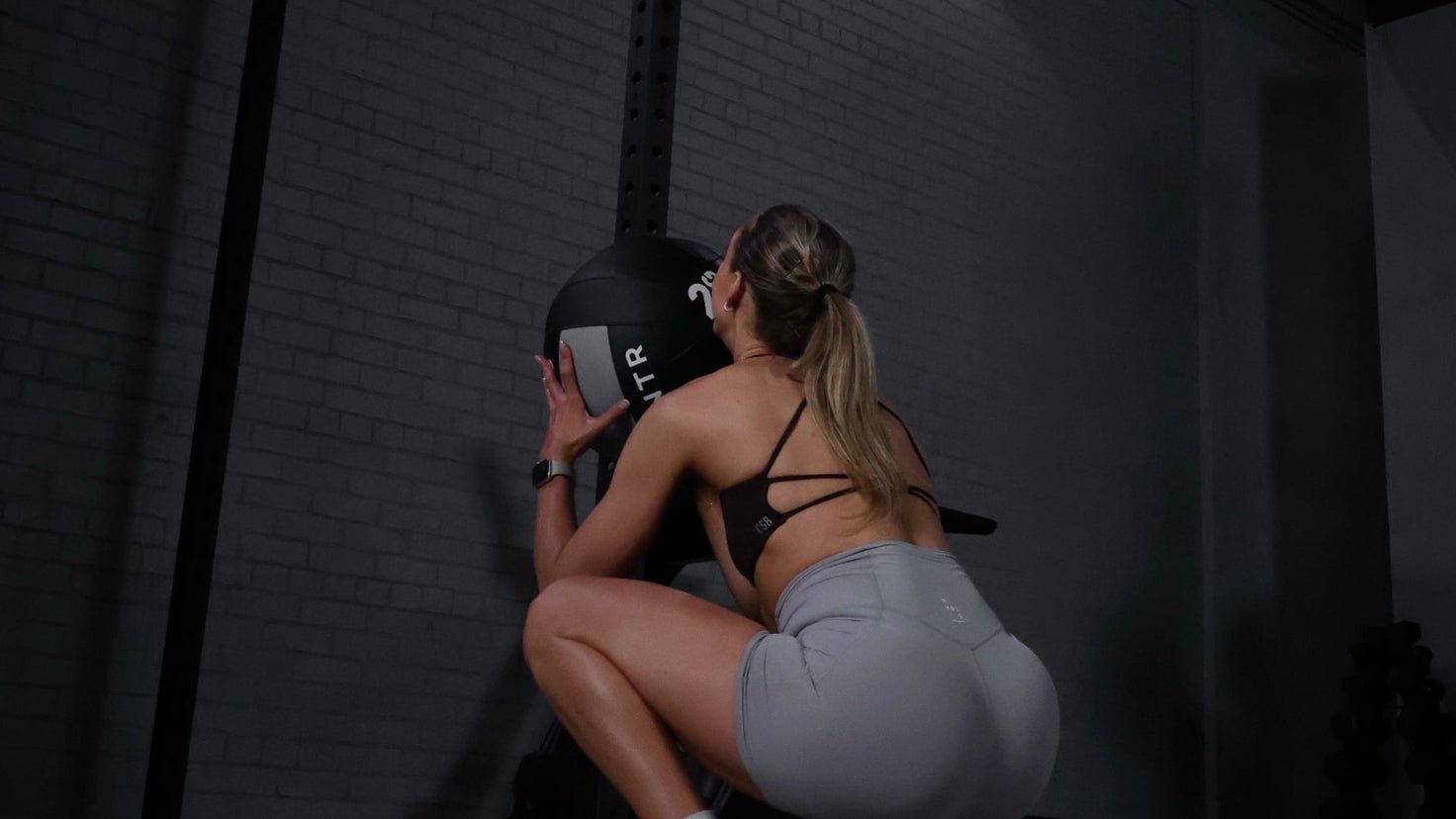
Station 8: Wall Balls (100 reps at 4kg to 2.70m)
What it is: Hold a 4kg medicine ball, perform a full squat, then drive up and throw the ball to hit a target at 2.70m height. Catch it on the way down and repeat. 100 total reps.
Women's Open weight: 4kg ball, 2.70m target height.
Technique priorities: Full squat depth on every rep. Explosive hip drive out of the bottom to launch the ball. Consistent target height. Catch the ball high and let it guide you into the next squat. Find a breathing rhythm: exhale on the throw, inhale on the catch.
Common mistakes: Shallow squats (risk of no-rep). Throwing with the arms instead of driving with the hips (arms fatigue fast). Breaking up into too many small sets (the rest between sets adds up).
Women-specific note: Wall balls are the final station. Your legs are exhausted, your heart rate is high, and you need to hit 100 reps at full depth with consistent target height. This program builds your wall ball capacity progressively, from technique practice at bodyweight in Phase 1 to race-volume sets (80-100 reps) with the 4kg ball in Phase 3. The squat endurance from your lower body training pays off here.
Race strategy: This is the last station before the final run. Break the 100 reps into manageable sets based on what you practised in training. Common strategies: 4 sets of 25, or 2 sets of 30 followed by 2 sets of 20. Keep your rest between sets to 5-10 seconds (just enough to take 3-4 breaths). Establish your rhythm early and hold it. Avoid the temptation to sprint through the first 30 reps and then slow dramatically.
Station order strategy
The stations are ordered deliberately. Understanding the cumulative effect helps you race smarter:
- Stations 1-4 (SkiErg, Sled Push, Sled Pull, Burpee Broad Jump): Upper body and grip are heavily taxed. Your legs are relatively fresh. Execute these stations cleanly and conserve your upper body where possible.
- Station 5 (Rowing): A transition point. Both upper and lower body are engaged. Use the rowing to reset your breathing and find a steady output.
- Stations 6-8 (Farmer's Carry, Sandbag Lunges, Wall Balls): Lower body and grip endurance become the limiter. This is where smart racing shows. Your leg training throughout the program has specifically prepared you for this back half.
For more on how this program prepares you for each station across the phases, read the phase guides: Phase 1, Phase 2, Phase 3, and Phase 4. For the full program overview, read the HYROX for Women Program Guide.
![[HFW] Race Day Playbook - Centr](http://shop.hyroxequipment.centr.com/cdn/shop/articles/hfw-race-day-playbook-7611005.jpg?v=1786070343&width=1472)

Leave a comment
This site is protected by hCaptcha and the hCaptcha Privacy Policy and Terms of Service apply.