
Are you cooking the nutrients out of your veg? Are you cooking the nutrients out of your veg?

Centr Team
22 Jul 2020

Are you eating enough vegetables? Don’t give us the answer you give your mother or your doctor – keep it real!
Data suggests that only 10 percent of us are consuming the recommended daily intake of 2-3 cups (or 5 portions) of vegetables. Why is this a problem? Vegetables aren’t just a key part of a healthy and balanced diet, they deliver very important vitamins and minerals, provide fiber to help keep your gut healthy and can reduce your risk of heart disease, stroke, and some forms of cancer.
Plus, if you’re not filling up with vegetables, you’re probably satiating your hunger with foods that are higher in fat or sugar, which won’t help when you’re trying to maintain a healthy weight.
So you already know the first step to eating better: fill your shopping basket with more delicious and nutritious vegetables. But did you know that the way you prepare those vegetables can impact the nutrients that they contain and how healthy they actually are for you?
Let’s take a look at how different cooking methods can affect your veg.
Are you a boiler or a steamer?
Because we’re all time poor and like to make things as simple as possible, boiling and steaming are the most common methods of cooking veg.
You may have heard that some of the vitamins in vegetables are lost into the water you boil them in – this is because these vitamins (including vitamin C, B1 and folate) are water-soluble. Steaming instead of boiling veg can help to retain this nutritional content. In fact, a study of broccoli cooked by boiling, microwaving, steaming and stir-frying found that steaming retained the highest level of nutrients.
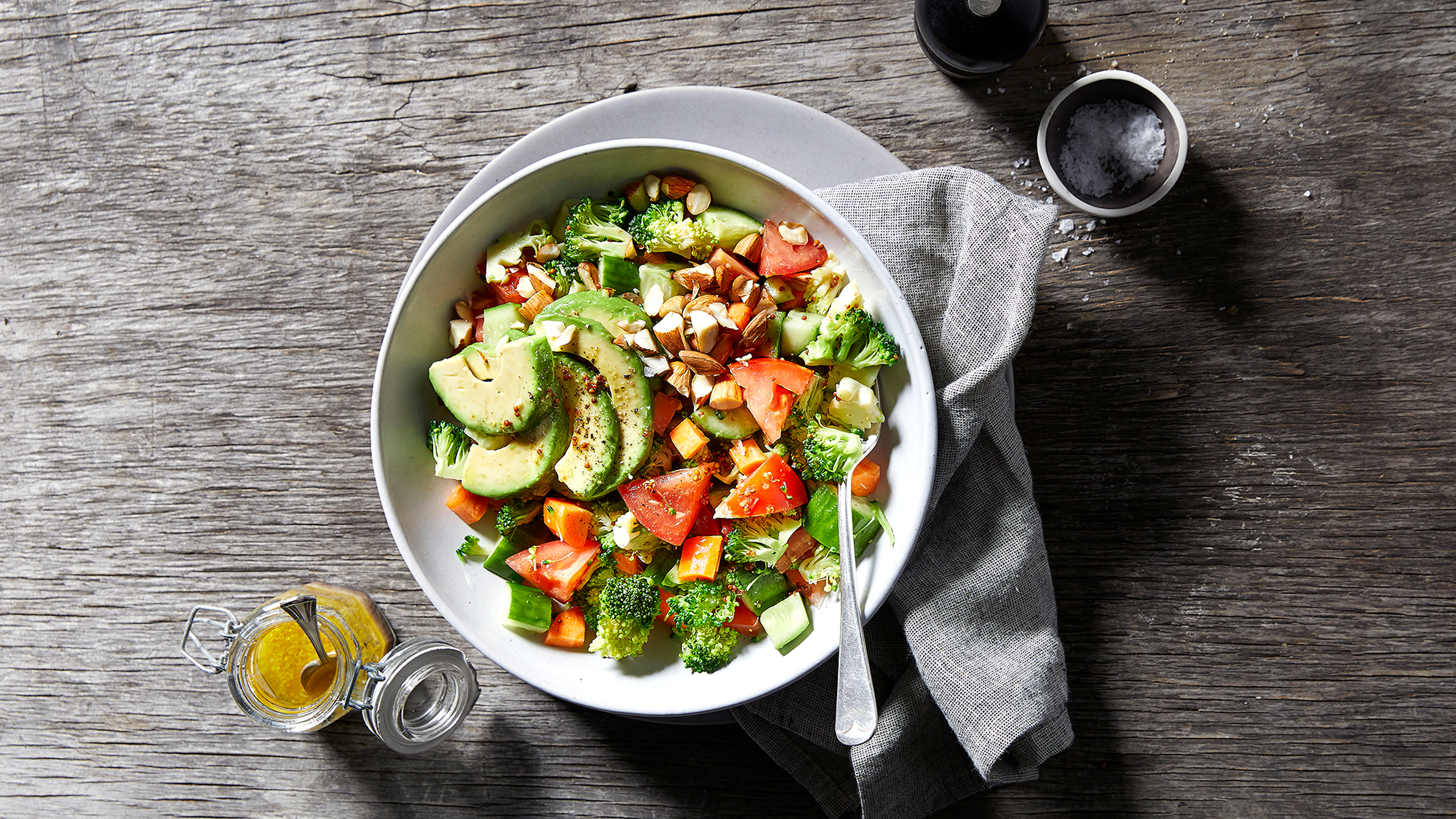
Our Chopped Vegetable Salad is a simple and delicious way to eat your greens.
Sucker for a traditional roast or traybake?
Don’t you love it when your potatoes go all crispy? Well, as with boiling, the intense heat your veggies face in an oven can lower the levels of some nutrients (vitamins C and B1). But there is good news, too – with cooking, some nutrients in veg become easier for our body to break down (including those in carrots and peppers).
When you are roasting, try not to char your vegetables – aim for a nice golden brown, instead. As with barbecued meats, charring or burning can lead to the formation of cancer-causing compounds.
Don’t go overboard with the oil, either. Not only is it high in calories, overheating can break down the oil, releasing harmful free radicals, and can destroy the positive anti-inflammatory properties of extra-virgin olive oil.
Saute your way or pretty fly with a stir-fry?
Throwing your veg into a saucepan or wok with oil or a sauce is a quick way to cook – which is good news for holding onto those B vitamins. And as with roasting, your body will more easily absorb some nutrients in veg (such as tomatoes and carrots) after stir-frying. On the flip side, these methods of cooking will reduce the amount of vitamin C in broccoli.
As you can see, most cooking methods have their pros and cons. So it’s a good idea to enjoy your veg in a variety of ways, from raw dipped in hummus through to roasted with your chicken. At the end of the day, our simple goal should be to eat more vegetables. So if roasting, steaming, boiling or stir-frying will convince you and your family to veg up, do it – and do it often.


