
4 ways to fire up your secret superhero muscles 4 ways to fire up your secret superhero muscles

Alexz Parvi
08 Jun 2022

Have my workouts ever left you feeling sore in places you didn’t even know existed? There’s a reason for that: I’m making your long-forgotten stabilizer muscles work for it!
They may not be as famous as your biceps or quads, but you’ve got a small army of stabilizer muscles – and they have a huge impact on your posture, pain levels and strength.
But what are stabilizer muscles and why am I so determined to wake yours up and put them to work? Let’s find out together.
 1/4
1/4
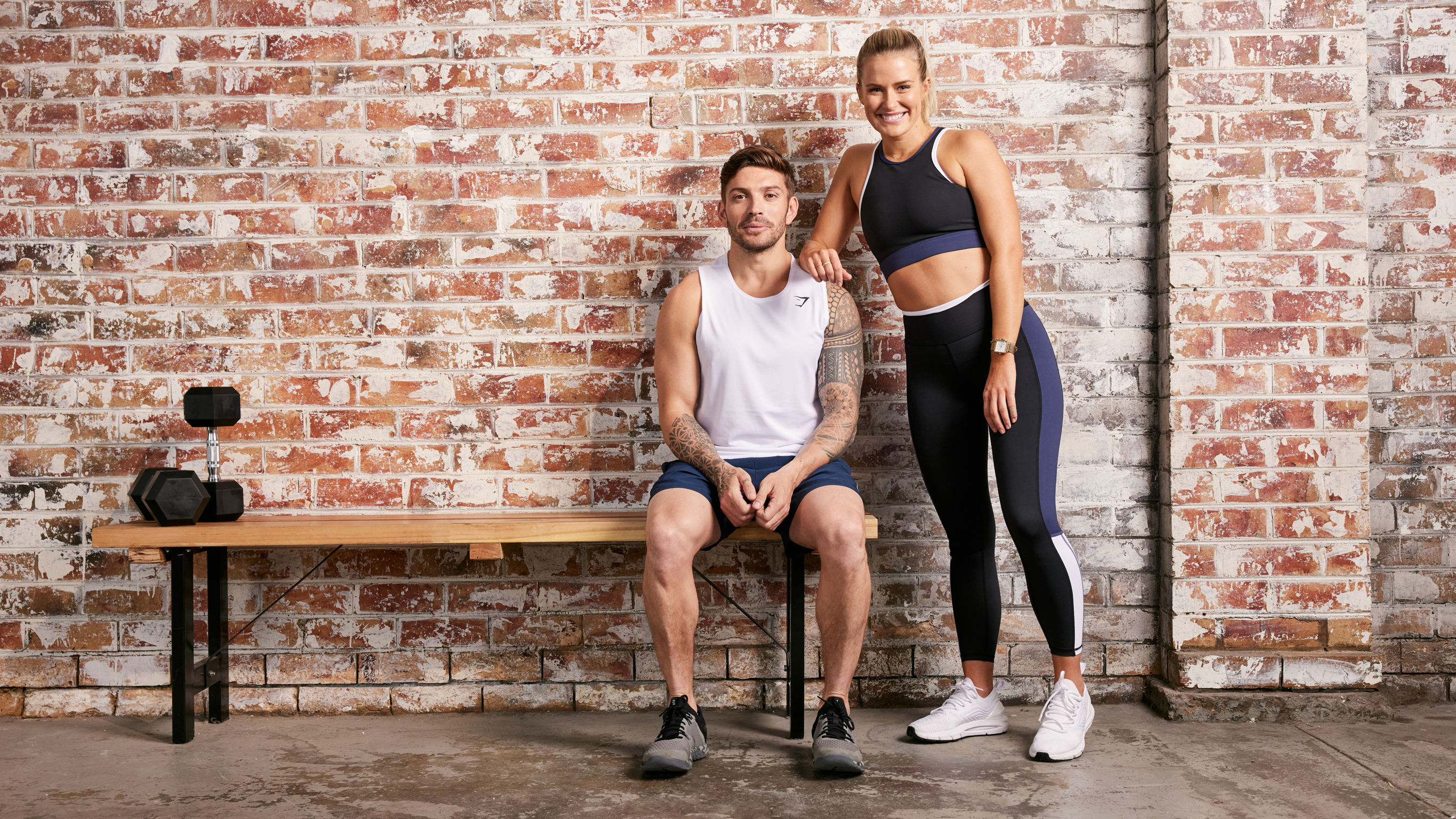
‘Stabilizing muscles’ isn’t just the nickname I give Luke when I lean on him for support.
The hardest workers in your body
Someone once described stabilizer muscles to me like this: they’re not the rock star, but they’re the roadies working away in the background to make sure the show runs smoothly.
Technically, any muscle can be a ‘stabilizer’ muscle, as that just means it is providing support to whichever muscles are the primary mover in an exercise.
But in general, when we talk about stabilizer muscles we’re referring to the smaller and less well known muscles that help to control movement.
Some muscles that often act as stabilizers are the rear deltoids (during shoulder exercises) and the gluteus medius at the top side of your butt (which controls your hip movement). Then there are even smaller muscles, like the multifidus deep in your back which stabilize your spine, and the rotator cuff muscles which allow you to rotate and lift your arms.
 2/4
2/4
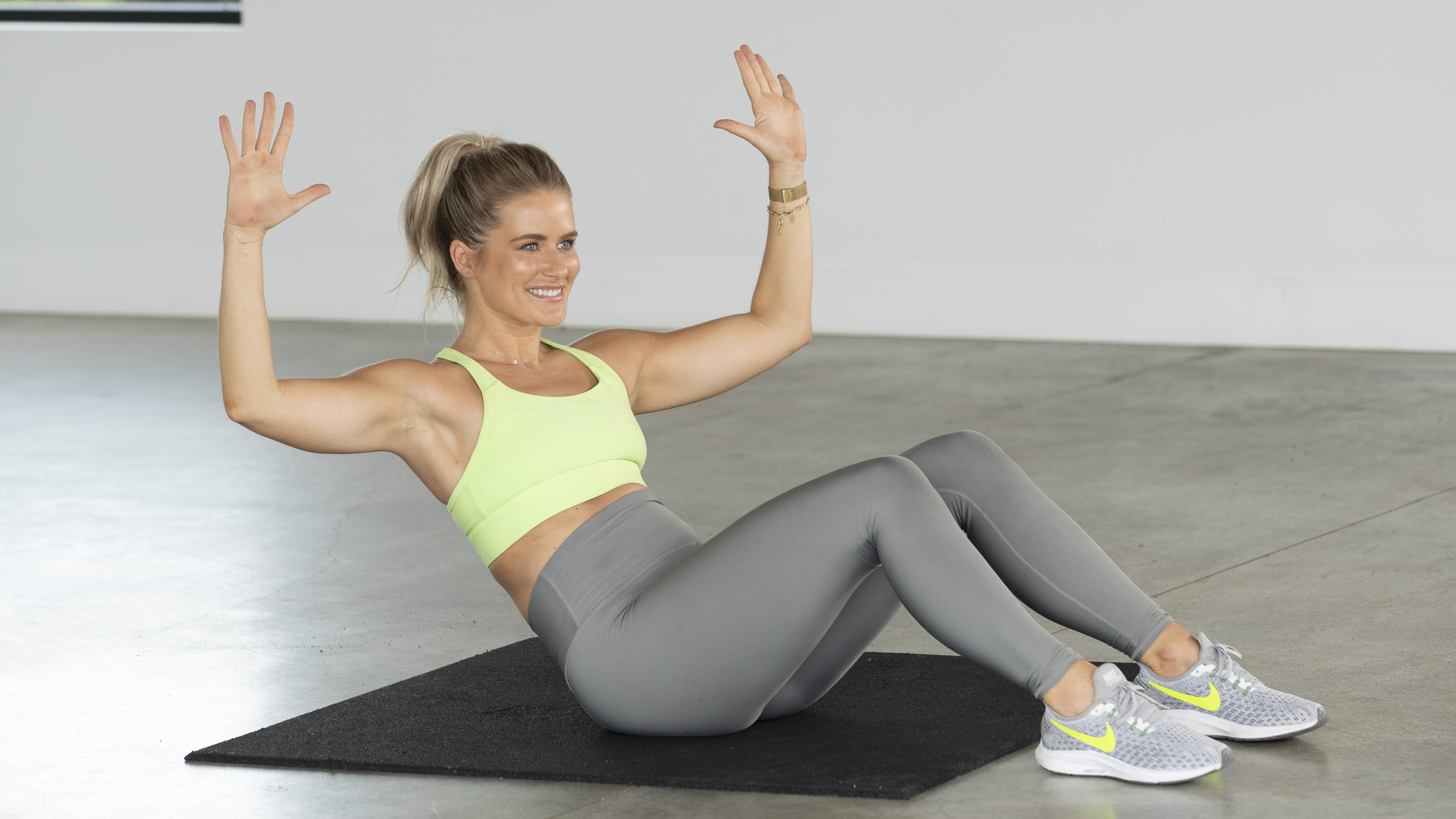
When performing a C-shape shoulder press your deep abdominal muscles have to work hard to stabilize your torso as your arms pump.
Posture, pain prevention & personal bests
They may not be the stars of your post-workout selfies, but when stabilizer muscles are weak it can leave your body out of alignment.
Here’s how these little muscles play a big role in keeping you moving at your best.
- Good posture: Stabilizers hold you upright when you sit and stand, and ensure correct posture and good movement patterns.
- Injury and pain prevention: Stabilizers are crucial to maintaining a full range of motion. Without them, primary movers overcompensate, leading to imbalance and injury.
- Balance: Attempting to keep up with Bobby in a challenging Plyo workout? Your stabilizers will keep your balance rock steady when the going gets tough.
- Level up: If you’re training with weights, the aim is to keep lifting heavier, right? You’ll need a team of stabilizers providing a strong base to your superstar muscles to keep upping the weights and chasing the gains.
 3/4
3/4
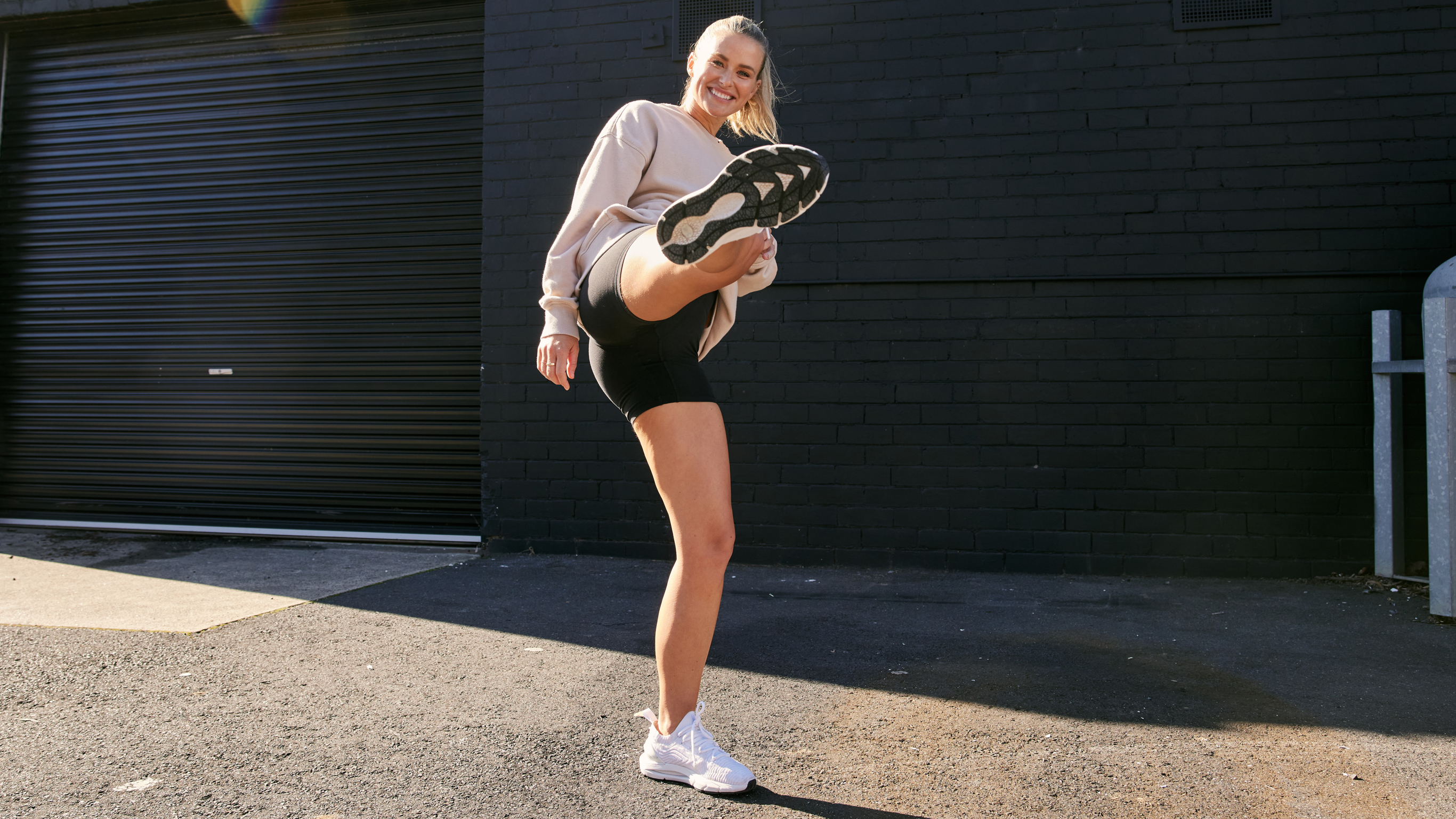
Stabilizing muscles are your key to kicking butt in all areas of your life.
So how do these muscles get called into action in real life? Think about squatting down to pick up a box. It’s your glutes and quads driving the movement, but the stabilizers in your lower back and legs are also working to keep you solid and in control.
Do you love your stabilizers as much as I love mine yet? Okay, good. Now we’re on the same page, here’s how you can put the unsung heroes of your body to work.
4 ways to work your stabilizers
The good news is that your stabilizer muscles will often get a good workout without you even realizing it. But if you know you have a weakness, or you just want to give your body a rock-solid foundation of support, there are ways to zoom in on these muscles.
1. Slow it down
Don’t rush through your training!
Nail your form and control your tempo, because the slower your tempo, the more your stabilizers are called on to support your primary moving muscles.
If you’ve sweated through a workout with me, you’ll know that I love a hold – this is another great way to build up strength and endurance in these smaller muscles.
2. Unilateral exercises
When you work one side of your body at a time with unilateral exercises, more of the small stabilizer muscles are recruited to keep you steady.
So while I might challenge you with moves like alternating reverse lunges or a hover with alternating legs, know that I am helping you to become a more balanced individual!
3. Choose low-impact bodyweight training
Hey, that sounds suspiciously like my Bodyweight HILIT style!
 4/4
4/4
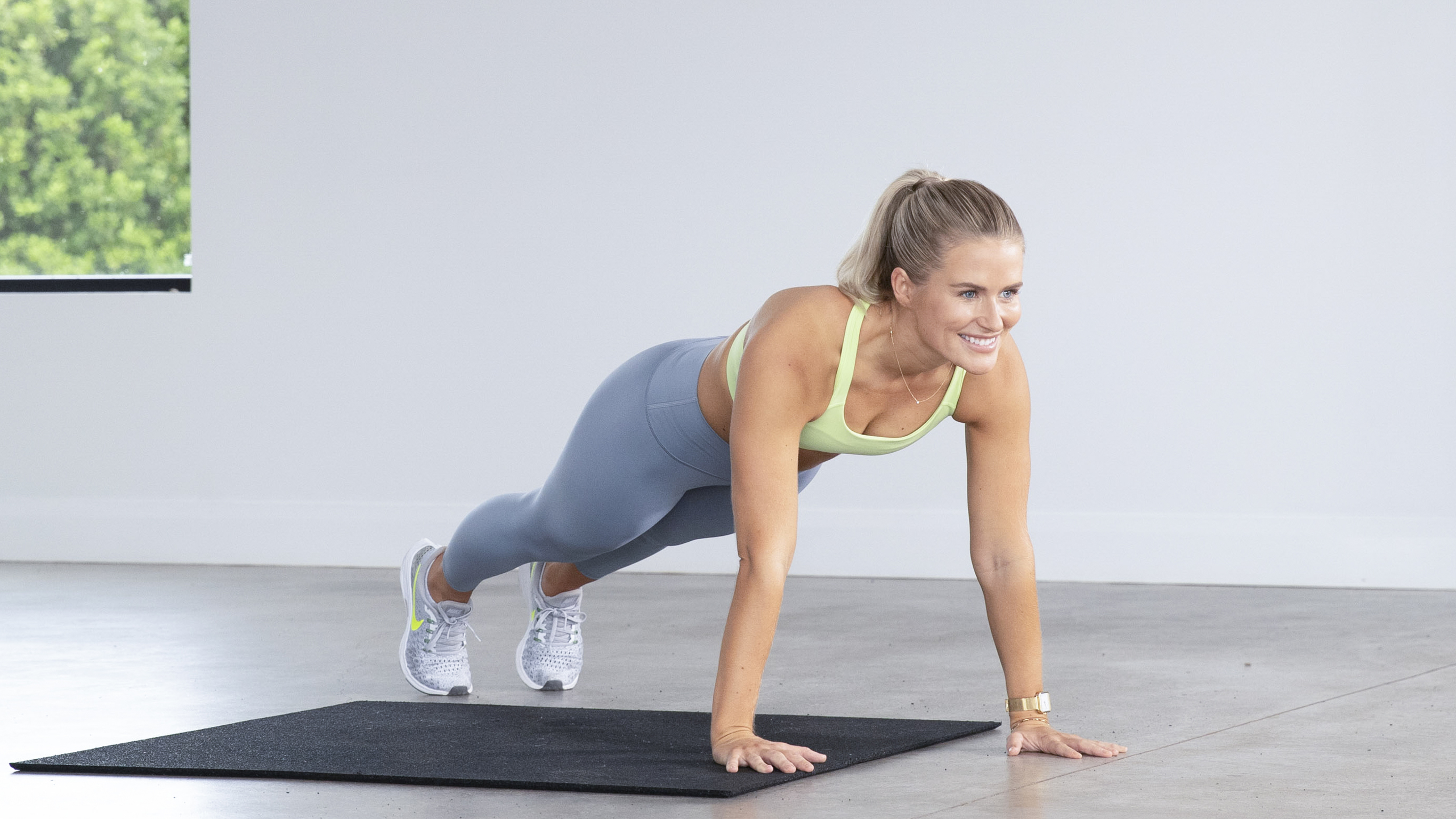
My Bodyweight HILIT: New Burn workout will challenge your stabilizers like never before.
You already know the toning and cardio benefits of my workouts, but another win is improved alignment through your posterior chain. I always want to keep your lower back, glutes, hamstrings and calves nice and straight then work for great muscle activation.
And because we’ve removed the impact, you can focus on good form and alignment to really switch on those muscles and understand what your body is doing.
4. Just add a band
Adding a resistance band to lower-body moves – like around your thighs when doing squat pulses or hip bridges – is an easy way to make your stabilizers work overtime as they try to resist the force of the band.
If you’re going to do this, make sure you use a wide fabric band (also called glute, mini and booty bands), not a thin tube style one.


